Research Point- Underlying Structure art

Mattew Stone

Mattew Stone is a London based artist which graduated from CamberWell College of Arts, London and he is currently stages performances and films. His work is widely known and I have discovered it by seeing his underlying structure art of a face. I was fascinated by his use of colours and the different ways he was showing the underlying of the skin in his work. Below is the picture of his work:
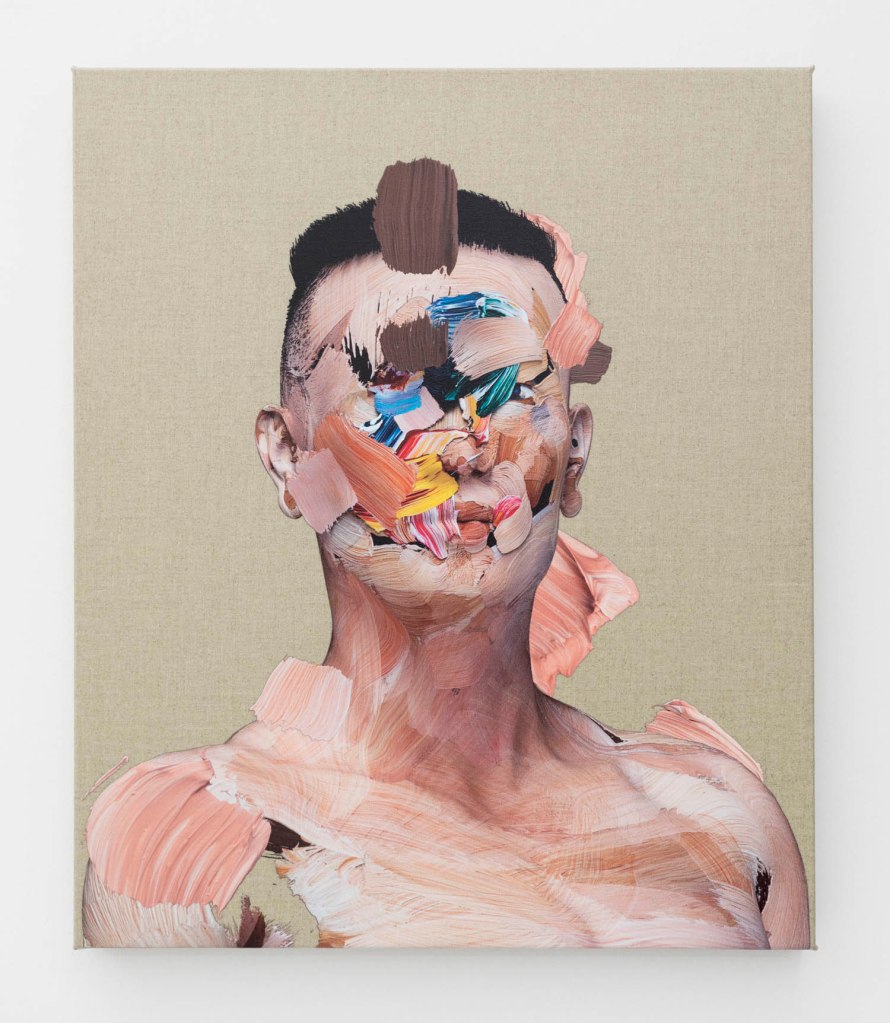
I picked this one out because I thought it was interesting how the paint was layered up in different ways to create the effect of the structure behind the skin. I think it is an interesting way of expressing this theme and showing contrast and cases of colours in the work. The different brush marks call for an interesting piece and I was really drawn to this. It is such a different way of expressing this theme rather than older work, it’s a lot more modern and shows such an abstract piece of work.

I love the way this artist has mixed the colours like that and managed to get the lighter tones in with the skin tones, the blend between the structure paint is really interesting, it doesn’t look bizarre it all just blends and works together well. I do think this is interesting and has really opened my eyes in my own work and trying to develop my self into thinking outside of the box.

Leonardo Da Vinci

Leornardo Da Vinci was an Italian painter also considered one of the greatest painters of all time. The Mono Lisa is the most famous of all his work and the most famous portrait in the world. His work isn’t just that he has various different pieces showing underlying structure which is what I have found whilst doing this research, below is the picture I have chosen to look at in more detail:
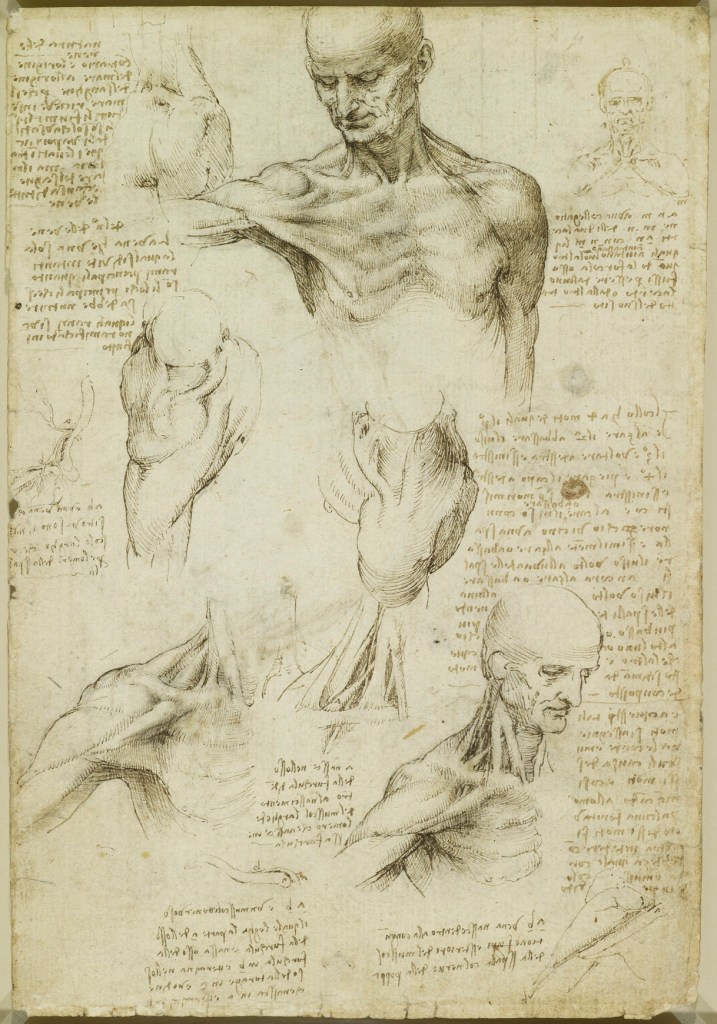
This piece is good for comparison from the first, you can see how the movement in art has changed. This piece is more more a factual piece of work and shows the in-depth of muscles and the full descriptive look at the scripture of the body rather than an abstract colourful approach from Mattew Stone, I find this piece much more interesting as it’s a realism drawing of the human diagram.

I think as years have gone on people have got more of an imagination when it comes to using bold colours or thinking more interestingly about showing art. The bold colours are completely different to this realistic sketch of the body yet they both impact on the theme. I find it interesting how time has evolved and how different artists think to represent things in different ways.

All in all I found this research interesting, like all of these comparisons it’s sure to see how much artists imaginations have changed throughout history and how much more adventurous they are with showing off different things in more abstract ways. In both pieces it has made me want to look into different styles of work and to experiment myself in ways I can create more interesting pieces.
Exercise One- The structure of the human body

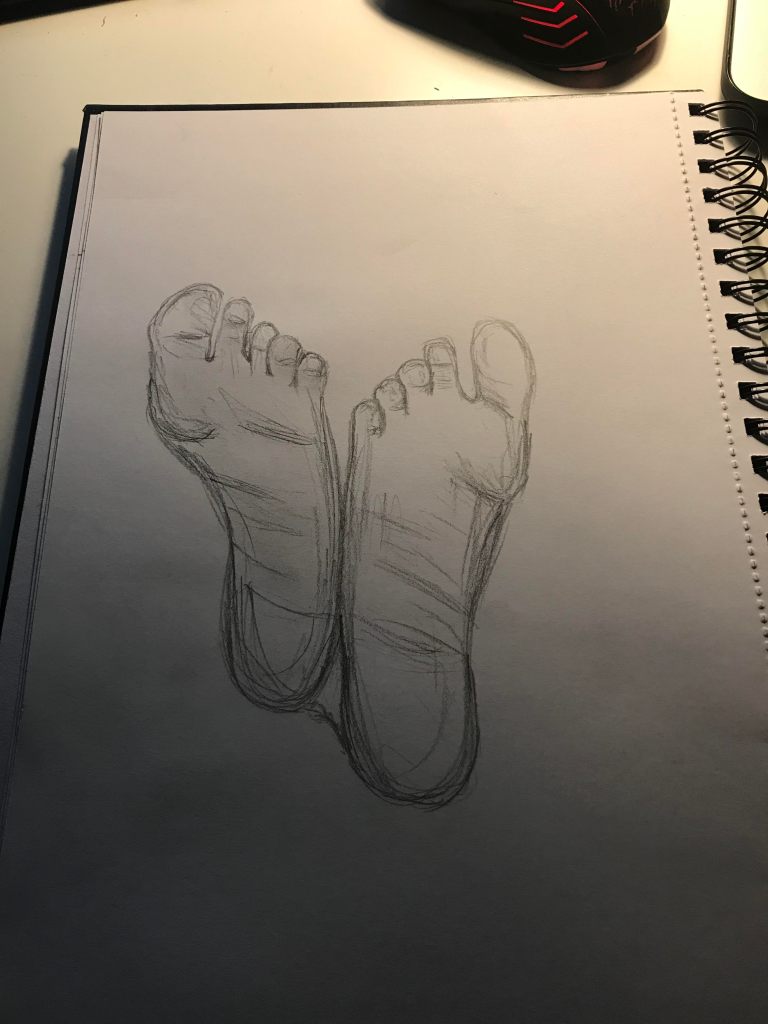
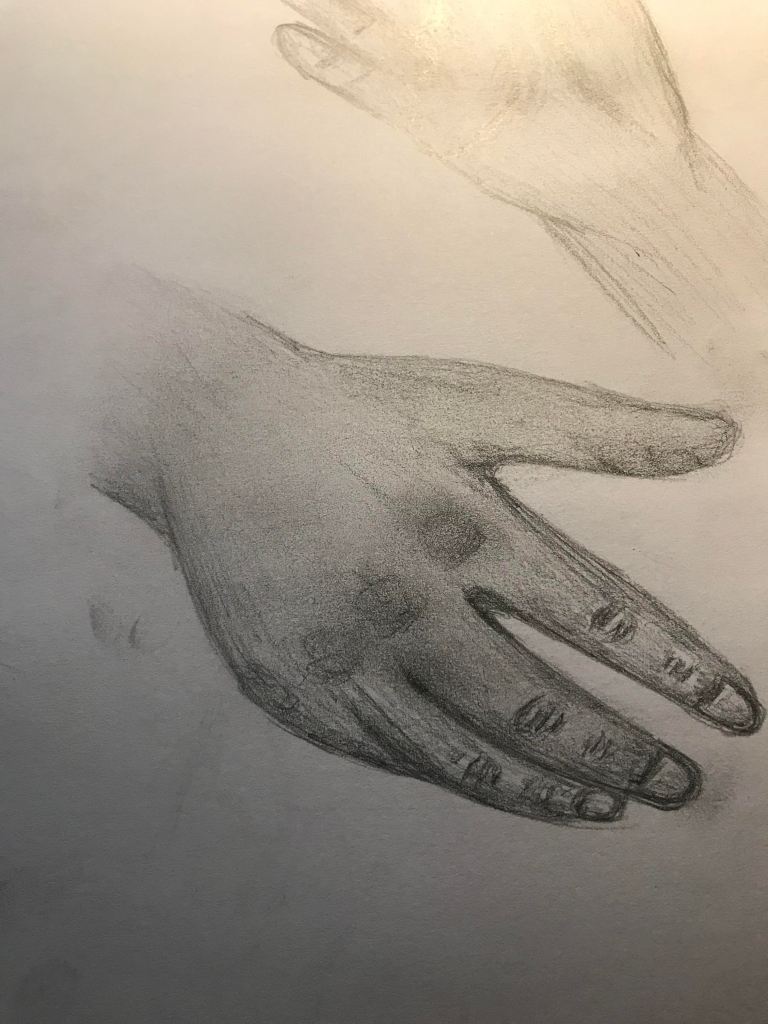
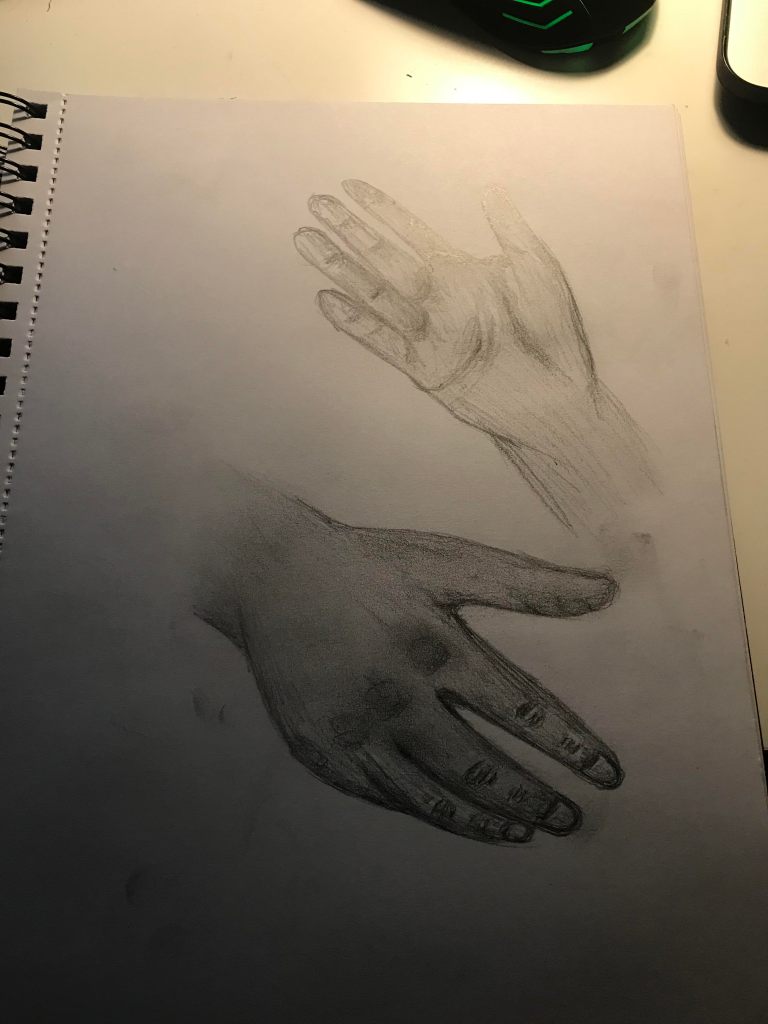
For this exercise we were asked to loosely sketch some of the structures which make up the human body, look up some photos and also use our own body as reference, loosely sketch and let this exercise help you figure out the bodies measurements and and proportions of the body. For this I decided to do the hands and the feet, I feel like this was the best parts to focus on for me as I do struggle to show detail on these parts of the body, I just can’t seem to get the right shapes. Below are the pictures of my results:

I chose to just use a soft pencil for these sketches, I did this so I could do quick and fast lines and be able to add tone on my first few hand sketches. I thought this would be good practice when I get onto showing more detail further into this project. I do like how the tone has created the more realistic look and it does make me feel more confident for future ones, although there is a lot of room for improvement I think it has boosted me to carry on with the practising because I will get better. I have always struggled with hands and feet but I do think I am happy with these outcomes.

All in all I do think this piece turned out well, I like that I have been able to improve on drawing body parts and I am impressed with this work yet I do think I need to improve on the detail and look closer into these things a lot to get more practice. I have defiantly learnt about the different measurements I need to keep in mind when drawing the body. To make sure the proportions are right and that the body looks all in the right size and not alien.

Exercise Four- Energy

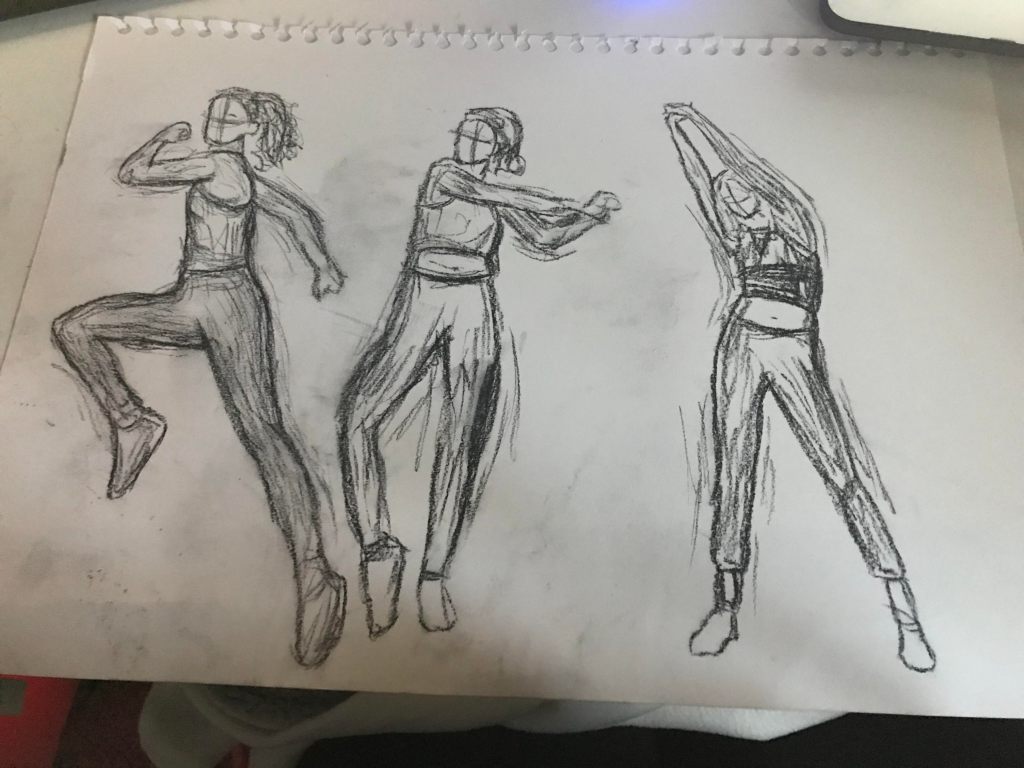
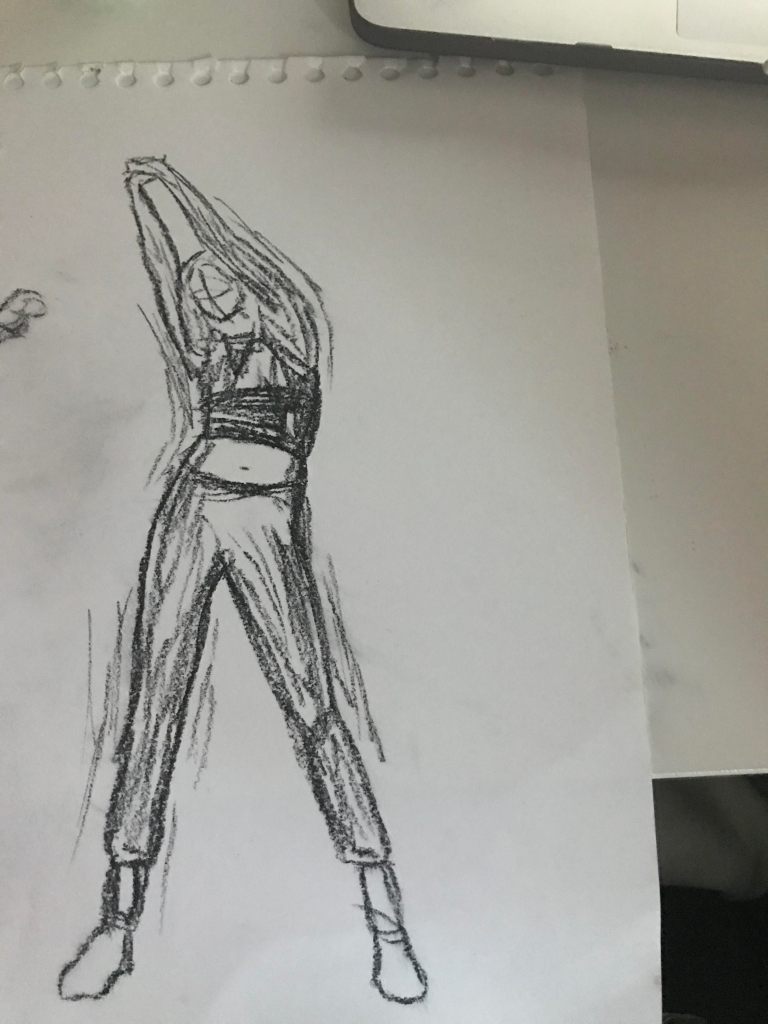
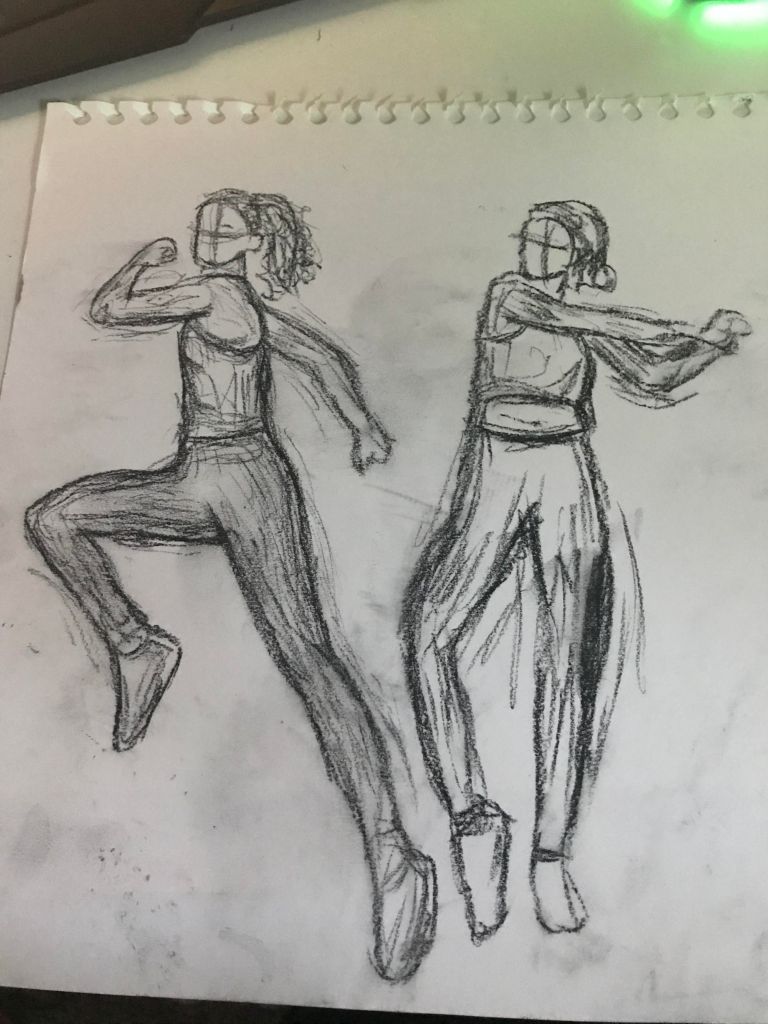
For this exercise we were asked to get our model to adopt with a dynamic position, such as lifting an arm, twisting hips, running or stretching. They needed to be able to hold the position for about five minutes to be able to sketch out the drawing. We had to work off A3 sheets of paper using a different material than usual therefore I opted with the charcoal as I haven’t experimented with yet. We were asked to do quick lines and then not worry too much about the details. Below are the pictures of my results:

For this piece I didn’t spent too much time on the detail or the tones I just sketched out the figure to make sure I got an accurate representation of the model and got the proportions right. I do think I got a good representation of the movement and showing different angles. I wanted to get these different poses to get the right look at movement and try to show the sense of it through drawing. I think the various lot of different lines show the movement swell as using lines out of the body to show this also. All in all I am happy with how these sketches look, I think I got the right effect with these drawings.

This exercise was a bit more complex, I think I did use some difficult poses such as the running position, I did this because I thought it would give a good sense of movement but it was a struggle for the model although I managed to get a good outline whilst they were moving. I do think I managed to get a good idea of the movement even though the model was moving, I enjoyed doing these sketches I thought it was a different way to look at the drawing to make it look like the subject was not just still. I think using charcoal was a good idea as it is out of my comfort zone and created lines that were fully effective for this exercise. All in all I am happy with this piece and I will continue to experiment with charcoal in future pieces.

Exercise Three- Stance

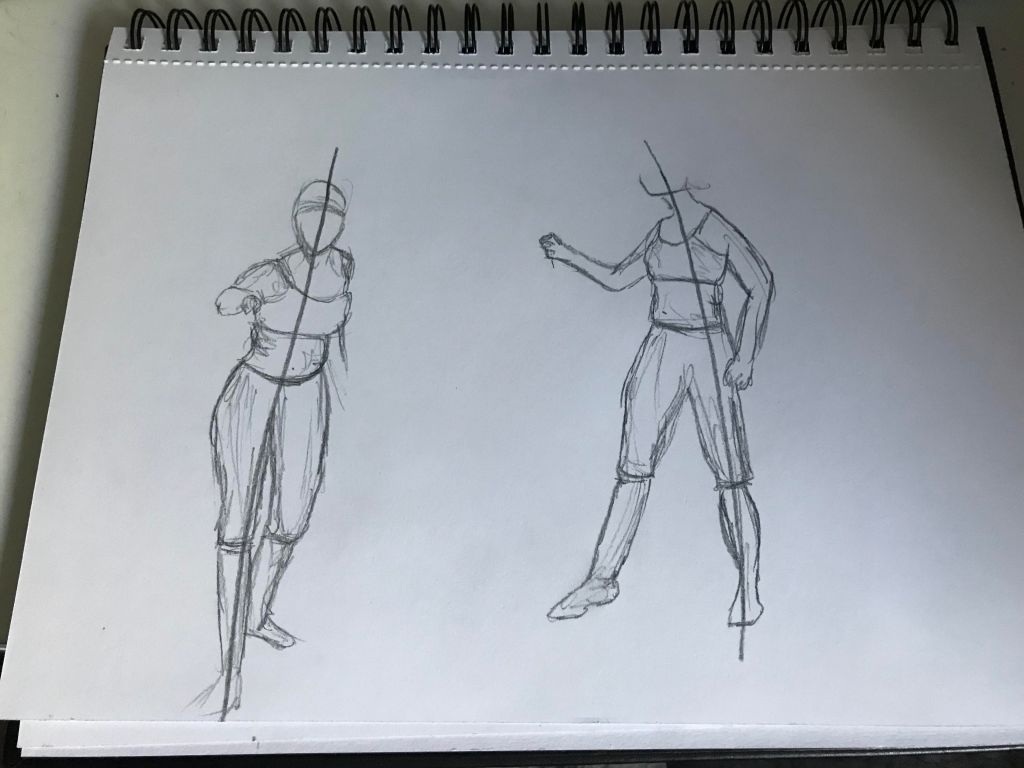
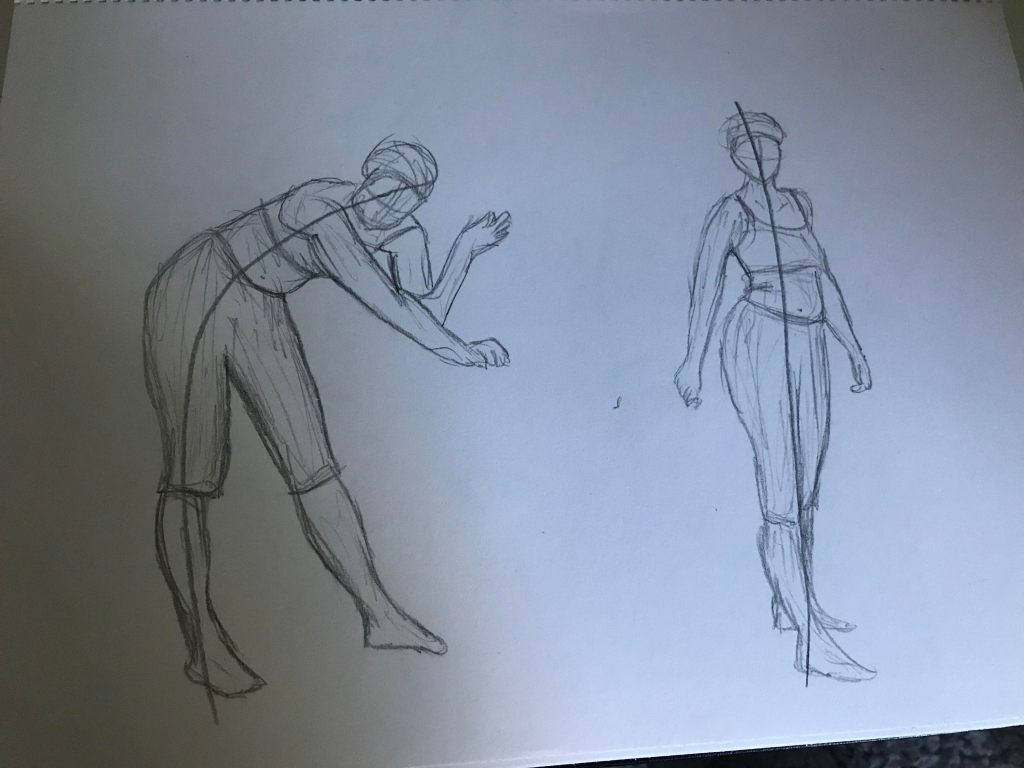
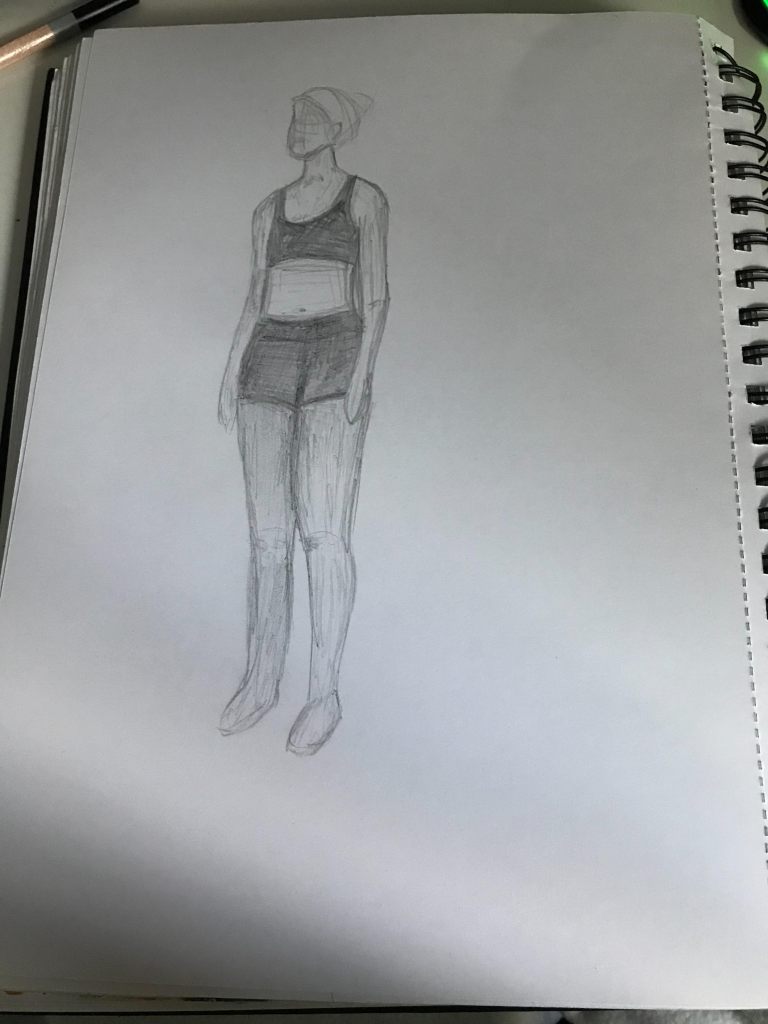
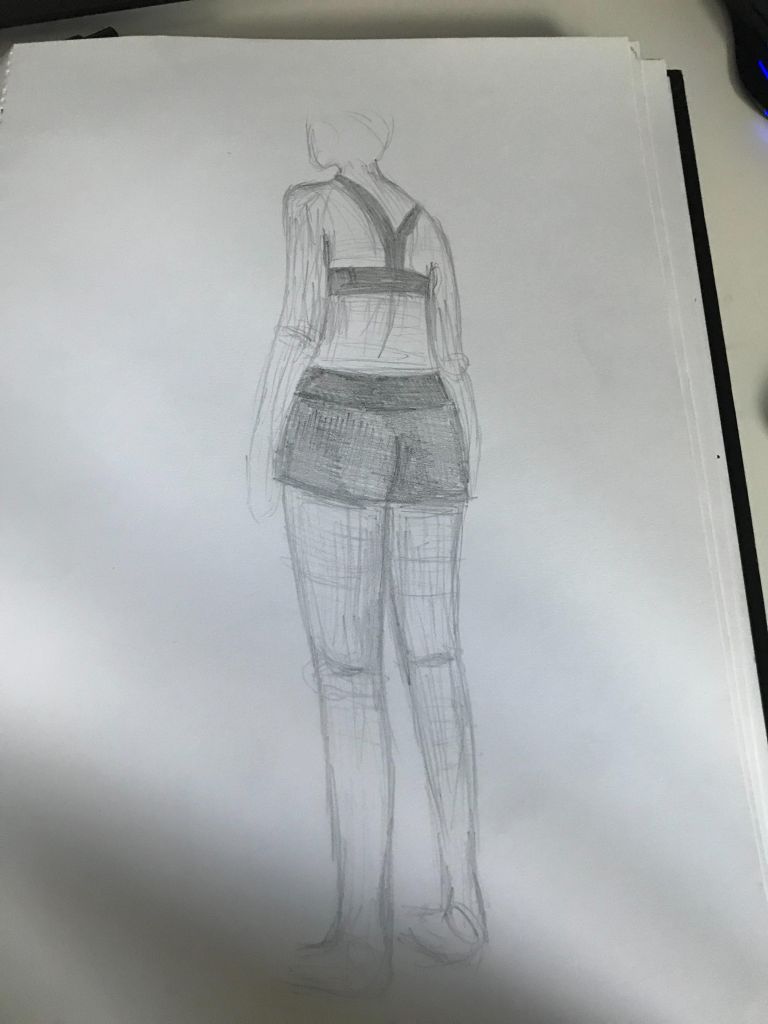
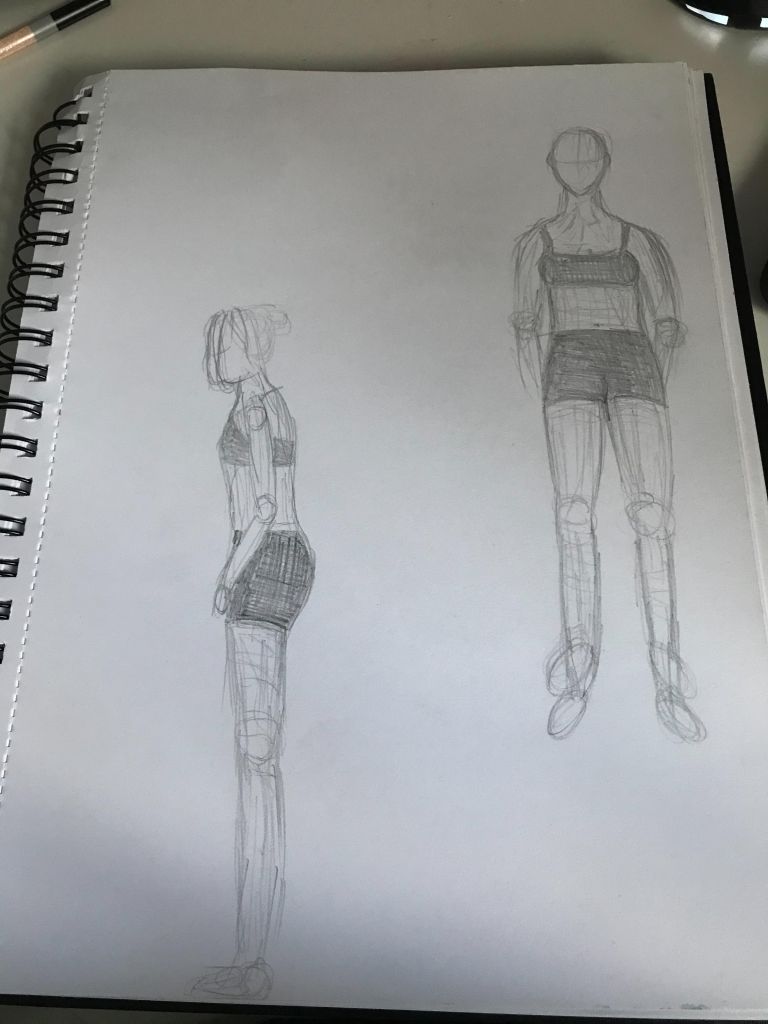
For this exercise we were asked to look for the line of balance and the centre of gravity in the standing figure. We were told it starts at the top of the skull and passes through the middle of the nose , straight down the middle of the chest cavity. We were told to move around the model in different poses and do quick sketches then identify the gravity and gesture then to mark it on our sketches. For this I decided to do four sketches each in different poses and then mark out my lines afterwards. Below are the pictures of my results:

For this exercise I decided to use a soft pencil therefore I could get the right softness and be able to draw quick lines to get the posture right and decide on the shaping easier. I thought it was interesting trying to identify how I was going to sketch these out and then finding the right place to draw the gravity line. I found that it was interesting to see how the body changes shapes when going into different poses and it was interesting to capture these sketches. I didn’t want to do too much toning to the sketches because the main focus is on the different poses and how the line changes throughout each pose. It was interesting to see how the line changed throughout and I think it will help me in my future sketches.

All in all I think this exercise was a success it was eyeopening to see the line change position when drawing the pose and I think it will help me get the angles right in my future sketches. I think in the sketch I did well on the proportions my critic on myself is I need to focus on drawing hands and feet to get a more realistic sketch rather than doing simple representations, I will focus on this on my further work and independent studies.

Exercise 2 – Essential Elements

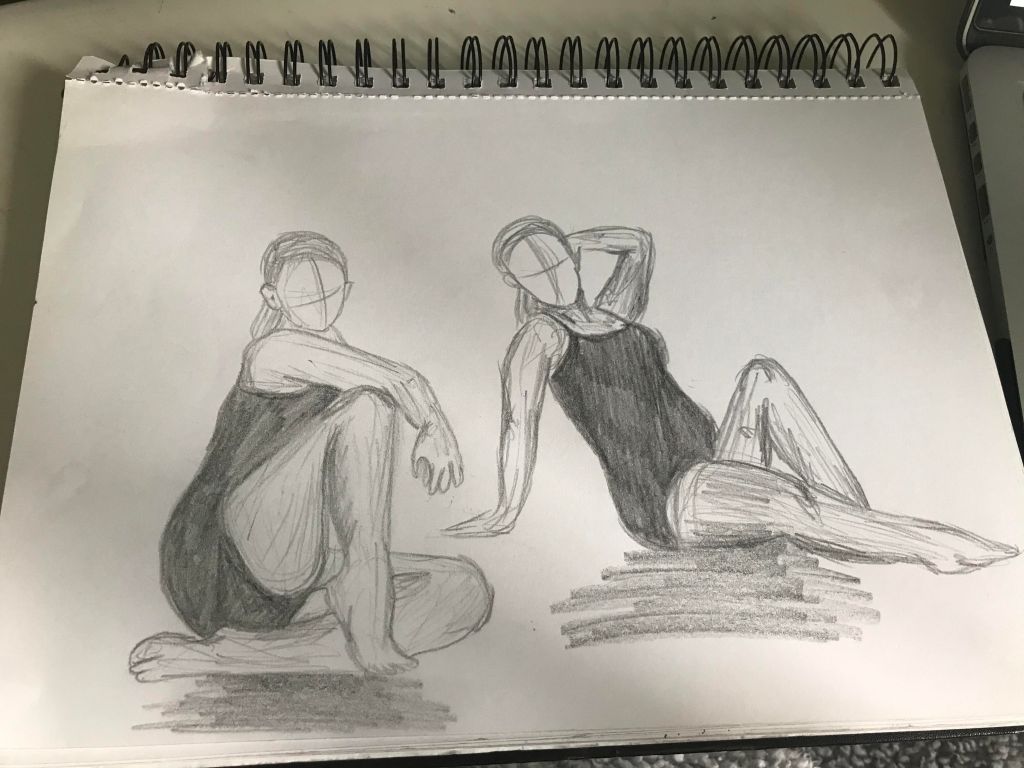
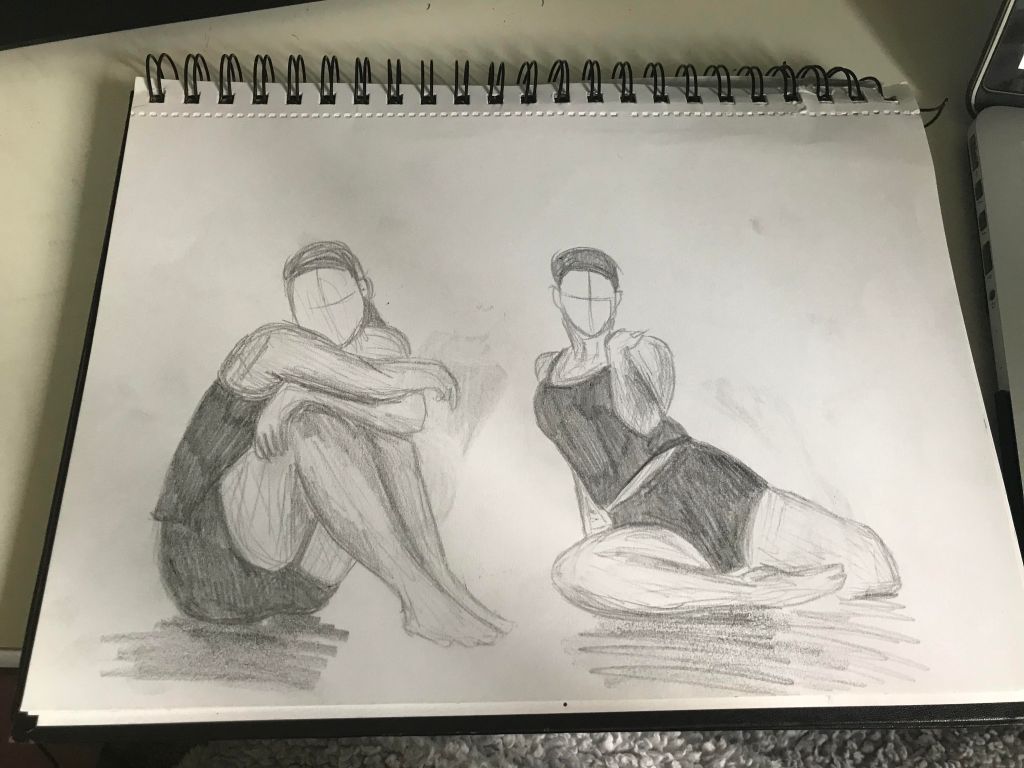
For this exercise we were asked to draw six different poses, to adjust the lighting so it hits one side of the model and show the three dimensional form of the body. Don’t spend more than 10 mins on one pose and to remember basic shapes and shade in the darkest tones of the body. We were told to build up the tones and use hatching and broad sweeps and leave the paper light on the lighter tones. Draw the full figure and don’t concern on the detail of the model.

For this I decided to use graphite, I felt like it was a good idea to broaden my media and look into sketching with different medias to get out of my comfort zone, using this material was different it seemed to be easier to make darker tones and was soft to draw with. Below is a picture of my results:

Doing this exercise was enjoyable, I liked focusing on the different poses and making sure I got the right angles throughout the and looking that the proportions are right to make sure the figure doesn’t look alien. I think I did well in this exercise for getting the right bends and angles on the model. I believe I did well with proportion swell as showing weight and three dimensional form, it was quite hard to show darker tones without making the proportions look off but I think I was able to show a balance between the two. Personally I think the first two of my sketches show the best sense of pose because I feel they were both complex poses to draw. I feel I did well at the poses and got the proportions right on these two sketches, they seem to have more three dimension and I did well with the tones throughout both of these sketches. Doing these drawings there wasn’t any movement really, it was more tricky to draw quickly and be confident with my markings, some of the poses my model did were tricky for them to stay in that position yet I think I did well to capture those poses as quick as I could just to get the basic shapes in, I think I captured this in my sketches.

All in all I enjoyed this exercise, I think I liked using a different media and getting out of my comfort zone and I am going to experiment more with this media in further exercises as well as independent studies. I feel that I need to improve on my harsh lines and not be so heavy on my outer lines. I want to improve on using lighter tones and just not shading the lightest tones at all.

Exercise 1- Basic Shapes

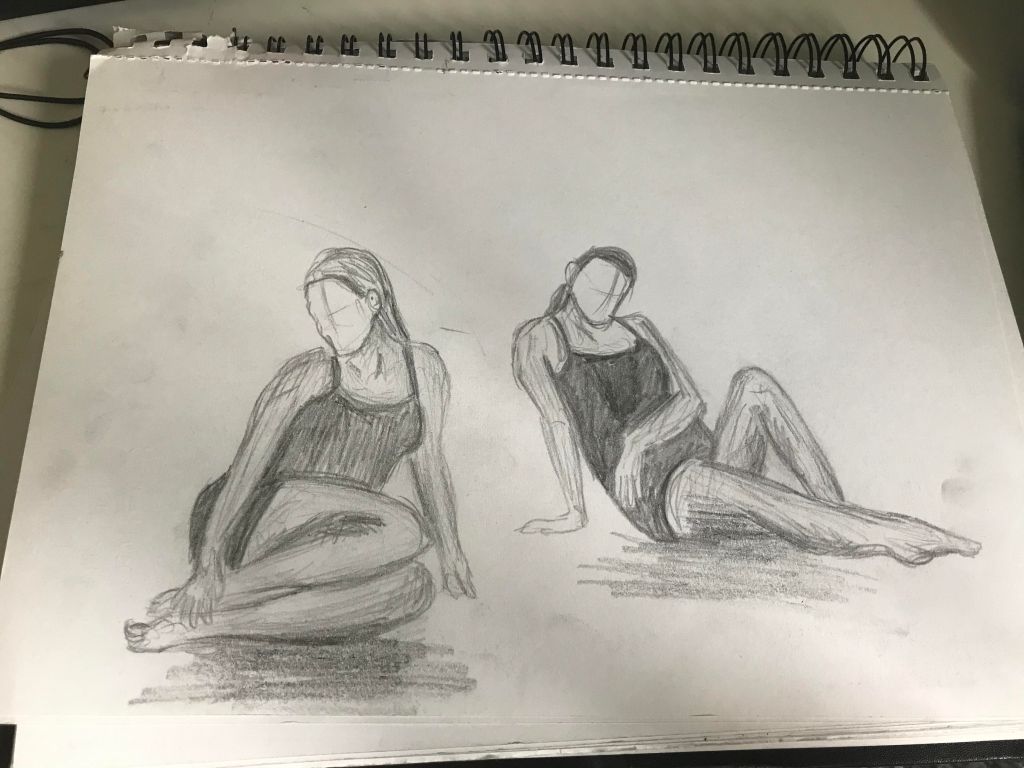
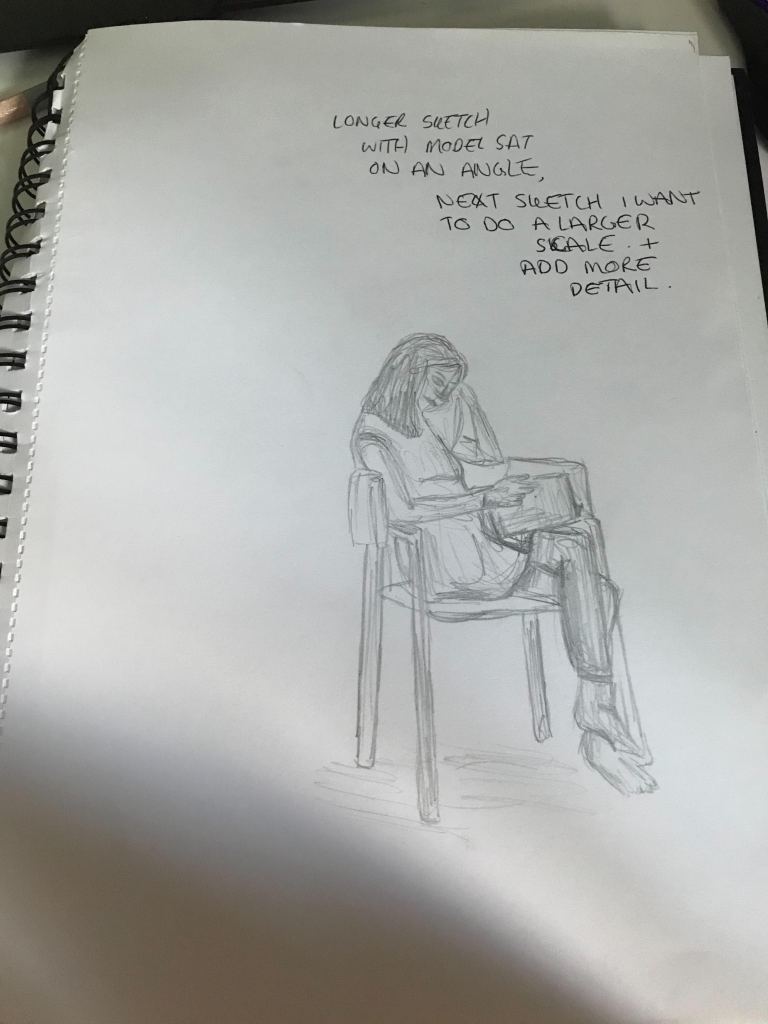
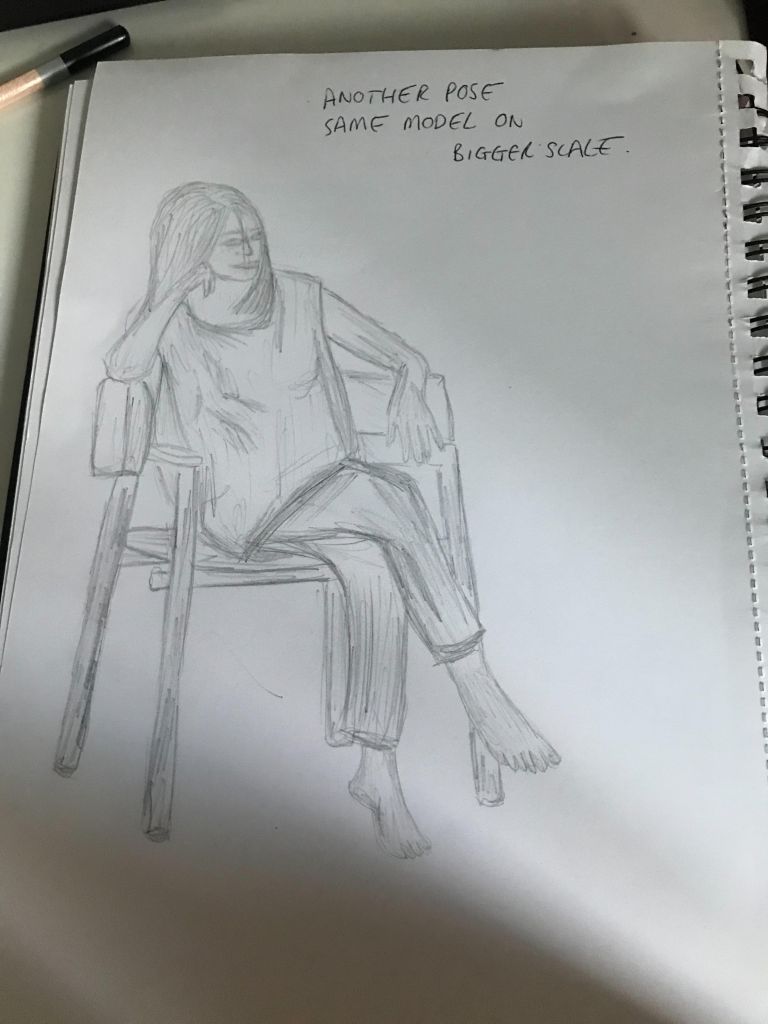
For this exercise we were asked to arrange our model at a slight angle in a chair (an angle they will feel comfortable in) and draw them. We were asked to pay attention to any of the twists or bends on the figure. Look at the figure and block the basic shapes to help draw out the figures, it’s all about help shape out the body to get the angles correct and proportions of the body.

Below are pictures of my results, I enjoyed doing this task and I feel I am getting better at getting proportions and poses of the models:

Doing these drawings was great, I enjoyed looking at the shapes and identifying how I could make it simpler to draw the whole figure and get the proportions more accurate than just looking as the figure as a whole. I decided to again use a pencil for this exercise, I like the quick and confident marks I make when using this media although I do think on my next exercises I am going to draw with a different material and see how it goes when experimenting in that department.

All in all I like the way I got the angles right on this model, I looked at the twists and turns of the models angle on the chair. I wanted to make sure the proportions looked accurate therefore I tried to look at the body in different shapes like the exercise asked to get an easier look at how they all can connect and get a more accurate representation of the body. I think I did an accurate drawing of the figure and how the body is positioned although further on in this project I want to use different materials and experiment with doing close ups of the body to look into detail.

Research Point- Foreshortening

In this research point we were asked to look into foreshortening, this effect is created by one part of your body, looking huge compared to the rest of your body. This effect is used in art and photography often to create an interesting effect and put a change to normal proportions when it come to bodies.

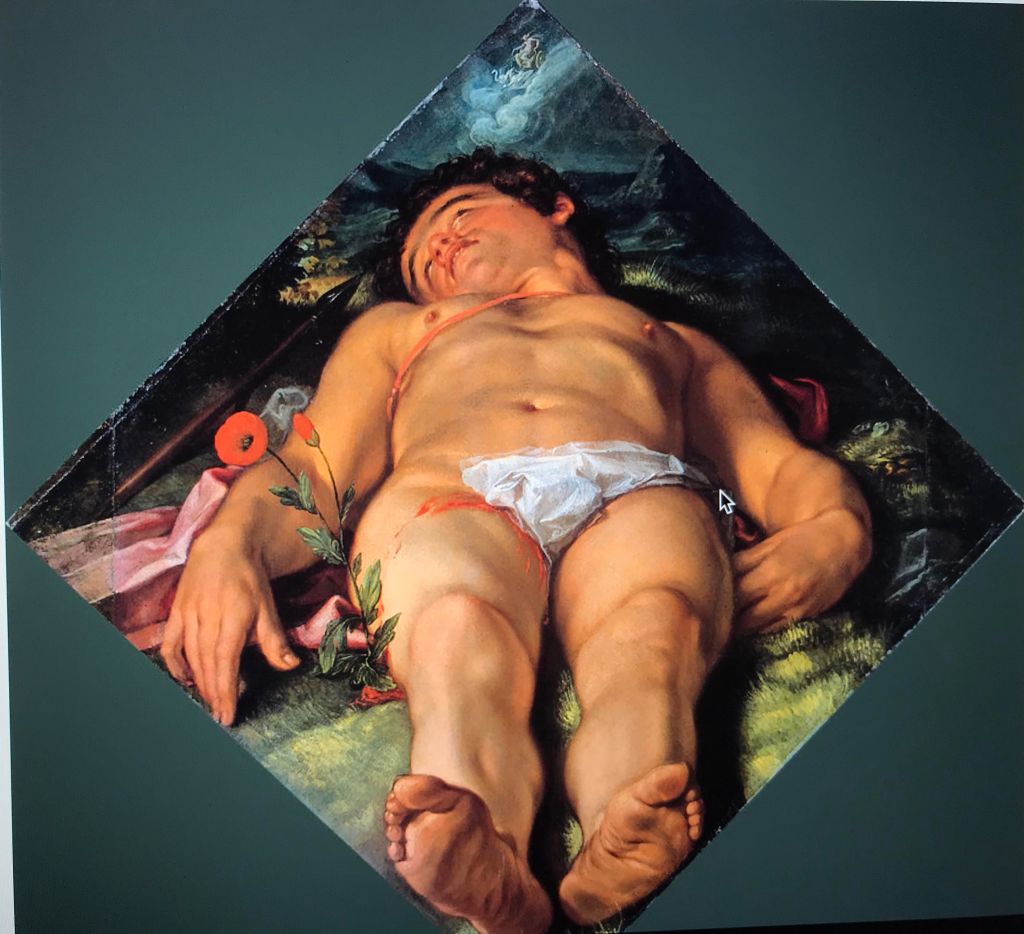
For research I looked into famous artists which have done pieces that are based on foreshortening, for this research I looked into Hendrick Goltzius, his famous painting ‘Dying Adonis’. Goltzius was a famous German born Dutch artist focusing on printmaking and painting mainly, his work was very popular in the 1500’s. His work carries different techniques one of those being his impressive foreshortening piece and others such as his drawing of his right hand and ‘Lot and his daughters’. Below is the picture I used to get inspiration and did my research off:

This piece is a prime example of foreshortening and the main focus is on the feet, although it is suspected the artist enlarged the feet so it didn’t look so off or non human. I do believe you can see how enlarged the feet look compared to the rest of the body and it creates a good effect for the whole painting.

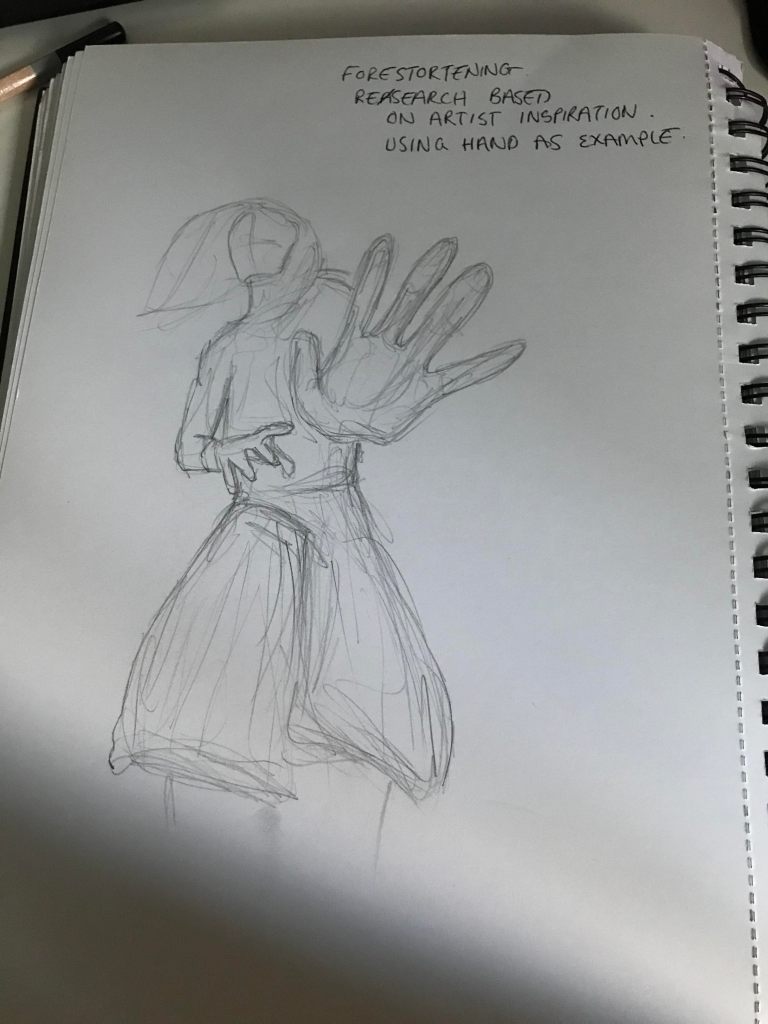
When taking inspiration from this I wanted to experiment in my drawing with a different part of the body. I thought this would create a different effect and I could experiment with different details to the artist. I liked doing this research I found it fun to see different ways you can present the body. It has made me inspired to do more independent studies on this style of work. I liked how the drawing almost looks 3D with the hand sticking out of the picture. All in all I liked looking into this style and I will use some of the inspiration from the artist I looked into and all the different styles I have seen of this style.

Exercise One- Quick Studies

For this task we were asked to get a model and take quick sketches paying attention to the proportions of the body using quick lines to show it. We were told to draw from the middle outwards and don’t let the fear of bold lines put you off being confident with the drawing. For this exercise I decided to draw four sketches of the same model in different poses. I wanted to draw quick lines and be confident with the lines I draw like we were suggested to do. Below is the pictures of my results:

I wanted to use the method of roughly marking the joints therefore I could get a rough idea of the figure. I then worked on sketching the rest of the body and focusing on the proportion of the model and making sure everything matched up correctly. I think I did well on the proportions and got an accurate representation of the model. I chose to do the drawing with sketching pencils, I did this because I felt it was the best to do quick sketching and to be confident with the drawing. I do think I was accurate with the different angles and positions I have shown by the model, I enjoyed doing this exercise as it really made me look at the different proportions of the body and helped me realise how to measure and get a more accurate representation of the model.

All in all I do think my sketches are fairly accurate and I am happy with how they turned out. I liked doing the drawings and looking in detail at how to draw the body. I liked being able to draw different poses and concentrating on the the body has changed its look in another pose. I found it helpful drawing the different joints just to get a good idea on how the shapes will then develop. It is more different doing quick drawings with a model yet it gives you more information to do sketches on, all together I am happy with these drawings. If I was to critic I would like to attempt to re-do these poses with a different media such as charcoal, or with a brush. I will do this as an independent study.

Exercise Two- Emphasising form with cloth

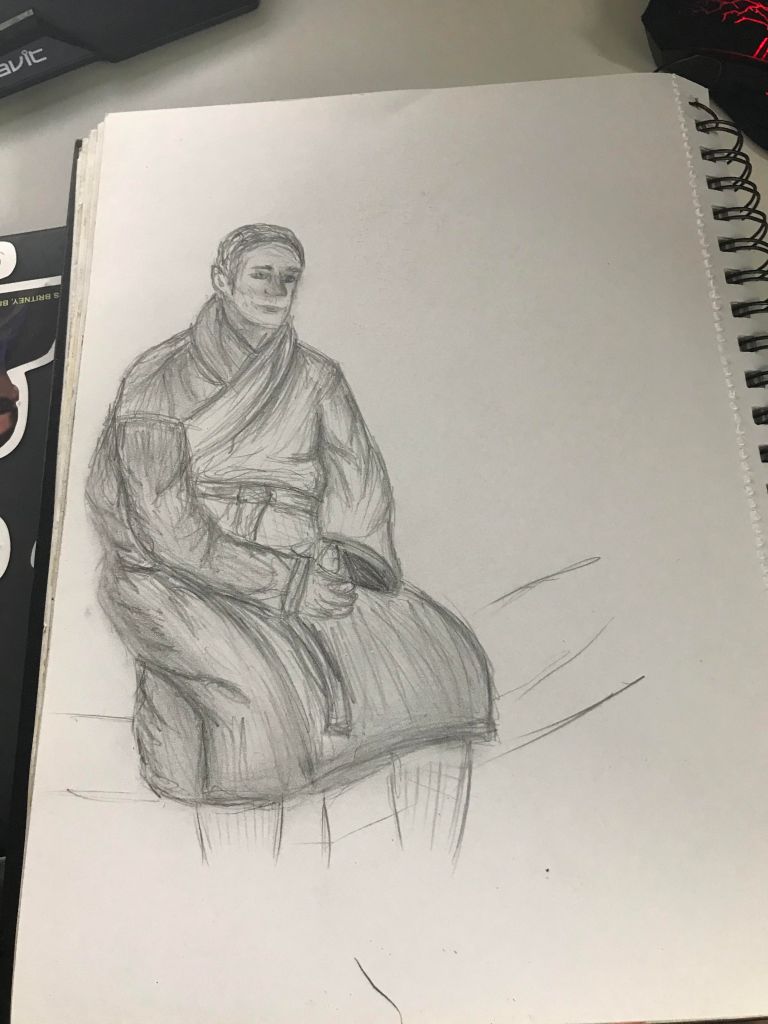
For this exercise we were asked to draw a model wearing loose fabrics or a dressing gown to show the fabric laying in different ways around the body. For this I decided to opt for the dressing gown and sat the model down. We were asked to be light with the pencil and outline the model then focus on how the body sits in the fabric. During this exercise I found it challenging not doubting myself with my drawing, sometimes I feel like the subject looked odd looking as the fabric was gaping around their body it somewhat looked odd for the head looking smaller but eventually I kept at it and I do think my result is fairly accurate.

I found this exercise challenging at times but I enjoyed drawing from the subject, there was difficulty within getting the right angle I felt comfortable with but I do believe I am happy with the result. In future exercises I think I will take more care with my lines, sometimes I feel I go too heavy on my outer lines so in future exercises I’m going to just go with lighting and not worry about it looking for a bold out line as it doesn’t create a realistic approach and I feel it does lessen my work.

All in all, I found this exercise fun and I enjoyed going light with the pencil then building things up, it was interesting looking at how the fabric layered around the figure and I enjoyed actually looking in depth at how the fabric sat on the body and the different shapes it made around. I think I will spend more time on independent studies looking into detail of fabric sitting on the body as well as different ways I can build up more realism tones. I do think this piece turned out well and it’s got me more excited to dive into this part of the course.

Exercise One- Drawing fabric using lines and tone.

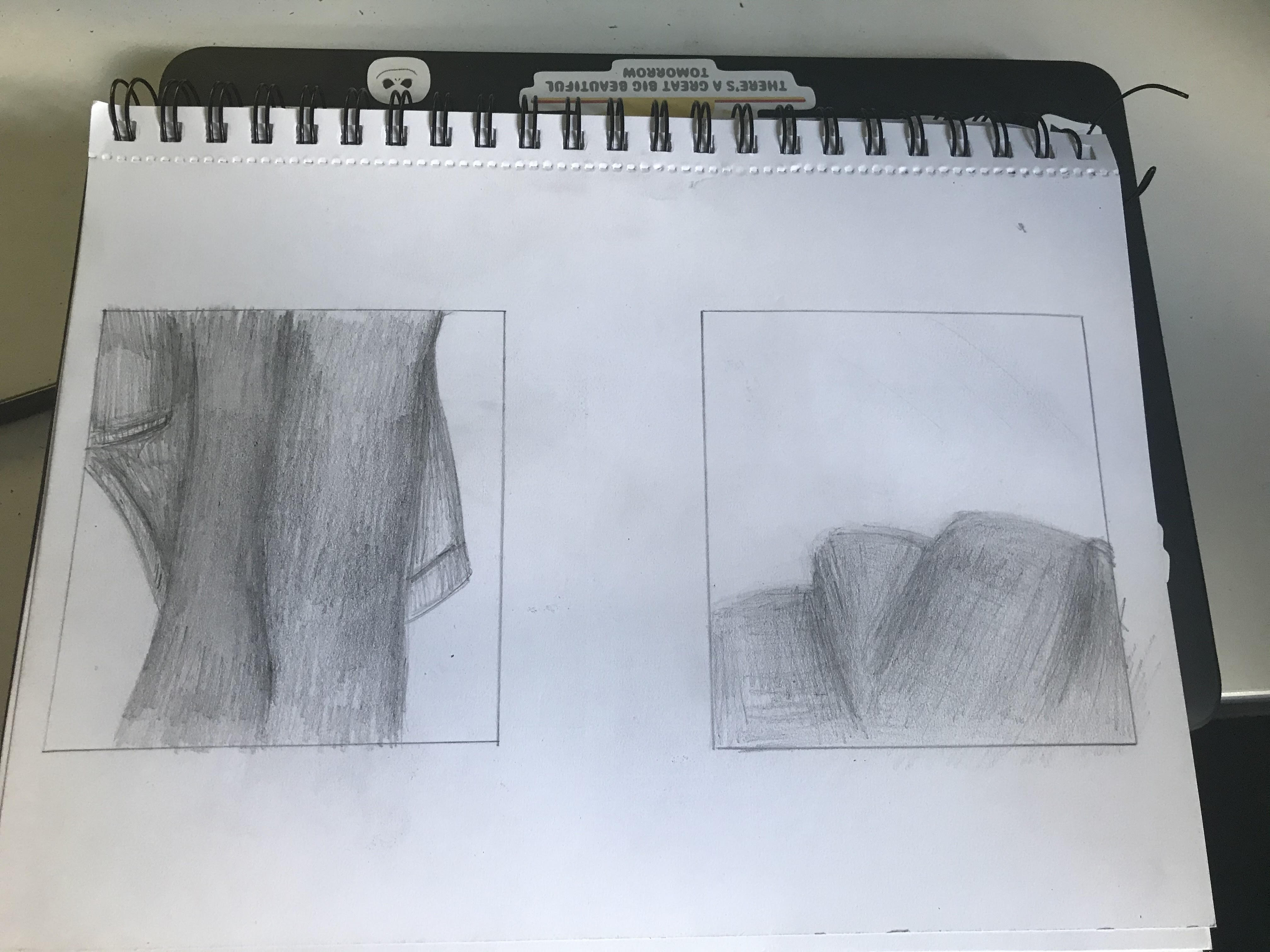
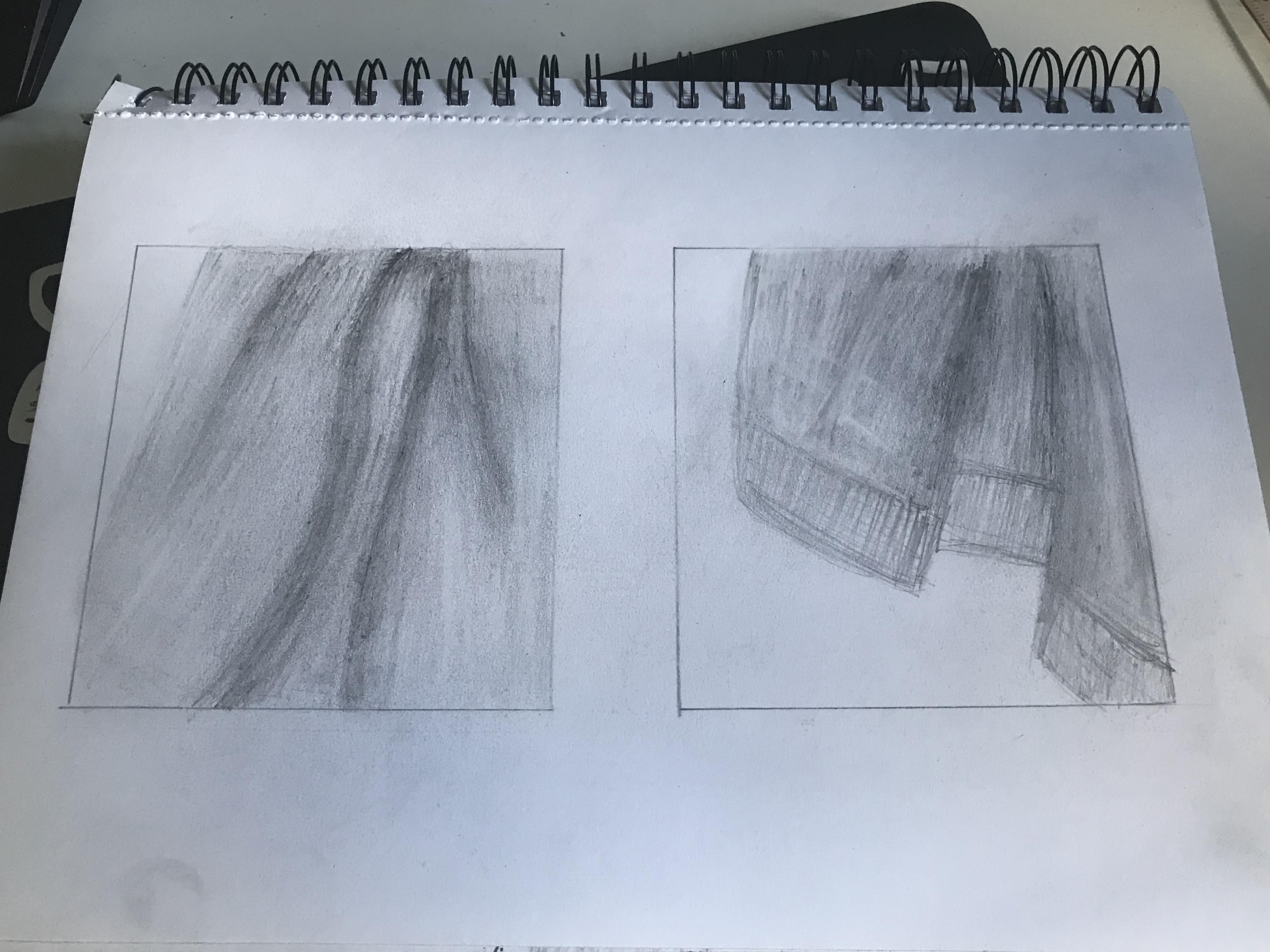
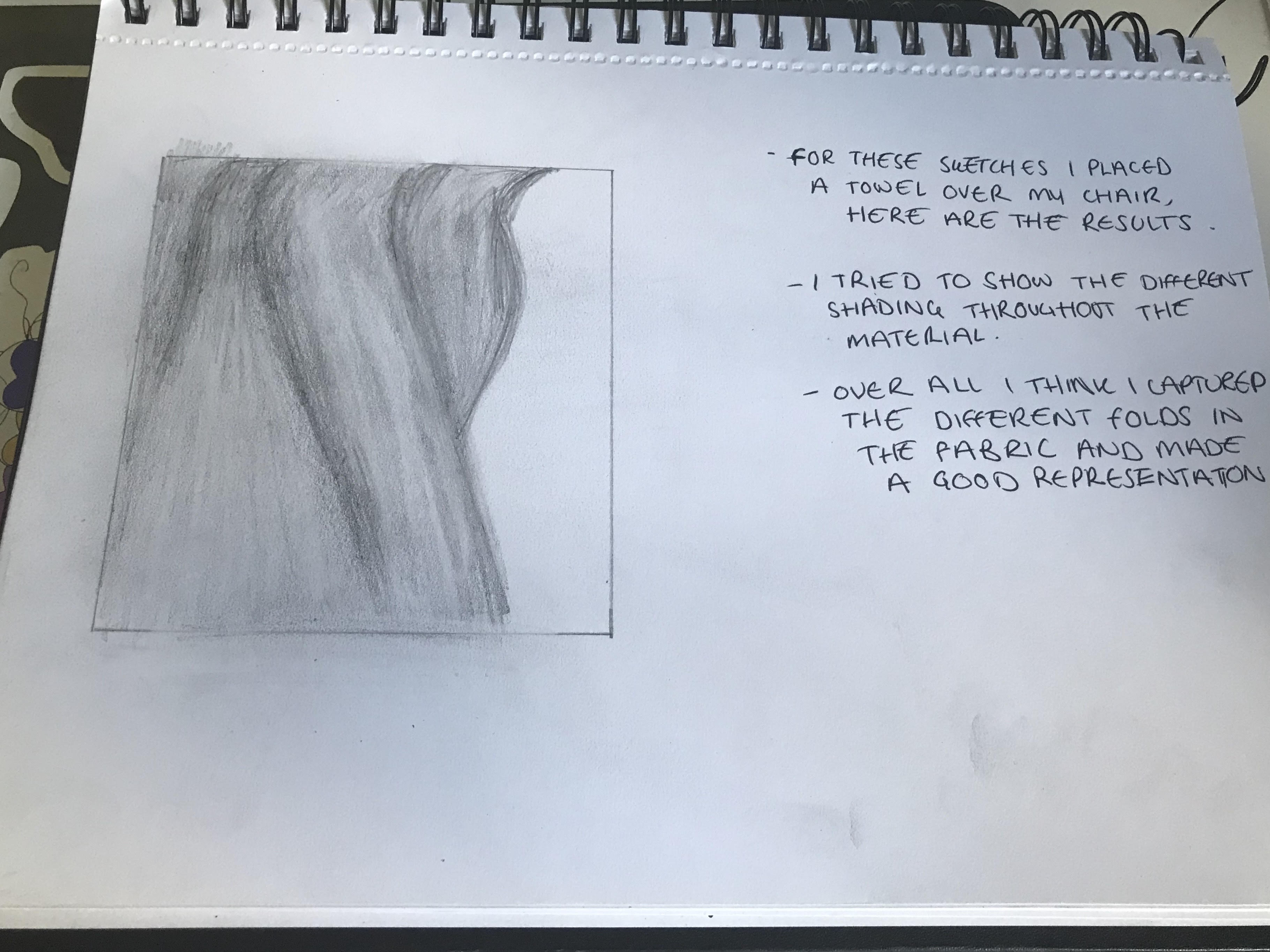
For this exercise we were asked to place a piece of fabric over a chair and take quick 15 minute sketches in 8-12cm boxes of what we see, we were told to pick interesting spots of the fabric we were drawn to to recreate. We were told to look at the different shading throughout and try to recreate that in these sketches.

I did find this exercise quite interesting to get the different tones of material and show the creases throughout the material. I do like the outcome of this exercise and I tried my best to get the creases right in the sketches. unnamed (32)unnamed (31)unnamed (30)

I think with this exercise I have shown the different creases well throughout the different sketches and got the layers correct. In my work I do think I need to improve further on my tones and getting the right amount of shading throughout my sketches, I think I will do more independent studies to really build up my skill with that.

I liked looked into the different angles of the fabric and figuring out how I can show the different creases in my sketches, all in all I do like how my work turned out. I think there is more room for improvement as far as showing different tones and the shadows in my work, maybe try to improve my darker areas to make it all flow together better. I found it quite challenging to show the volume but I tried to show my lines in my sketching to show the amount of volume in the fabric, the direction of my pencil markings to give it more of a detailed look.