Detail and Tone.

Detail and Tone.

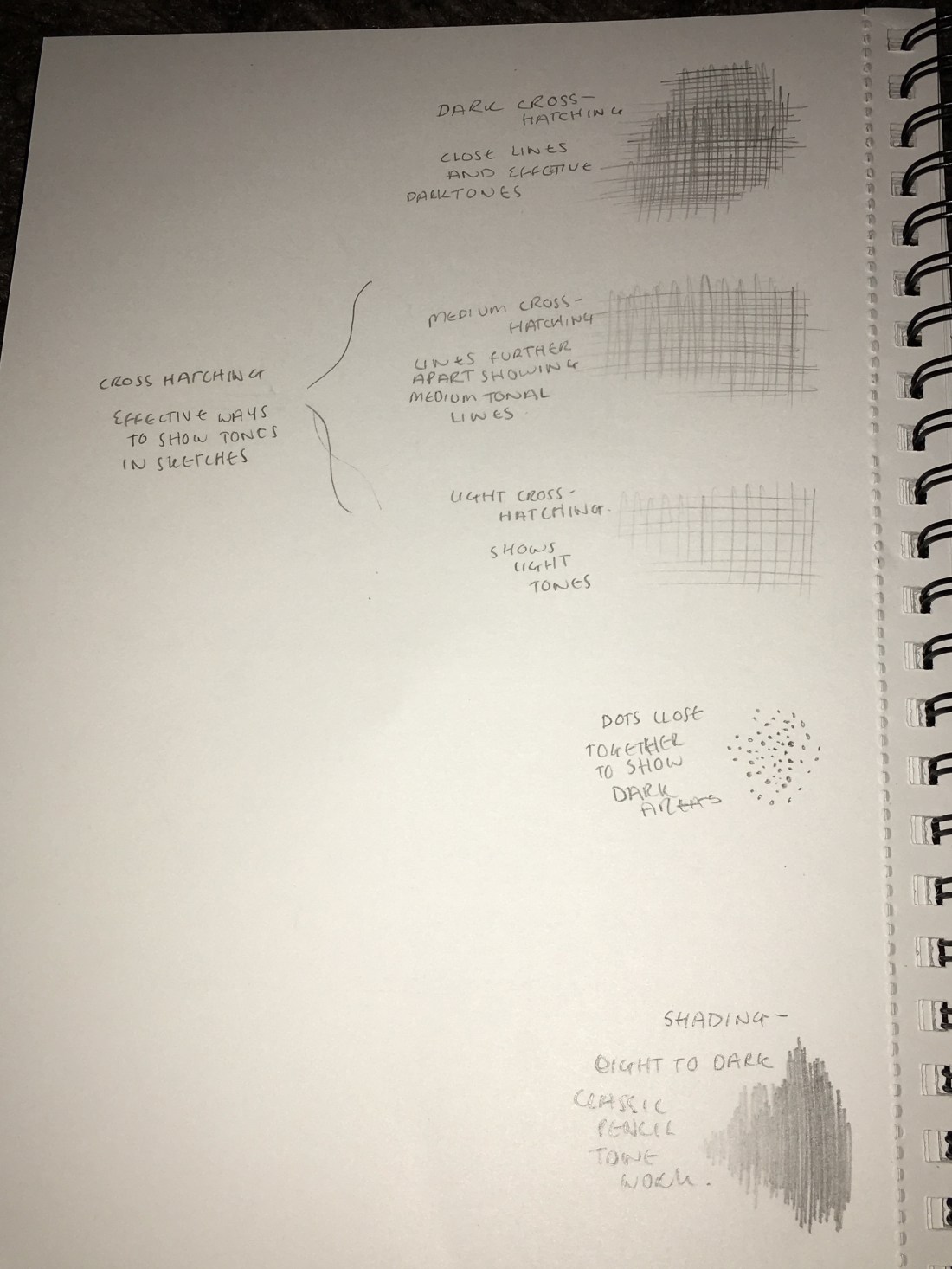
In this exercise we were asked to draw an object either something like a shell or some draft wood (something with textures) we had to use various different tone work and use techniques such as shading, cross hatching and using an eraser to enhance the light tones of the object.

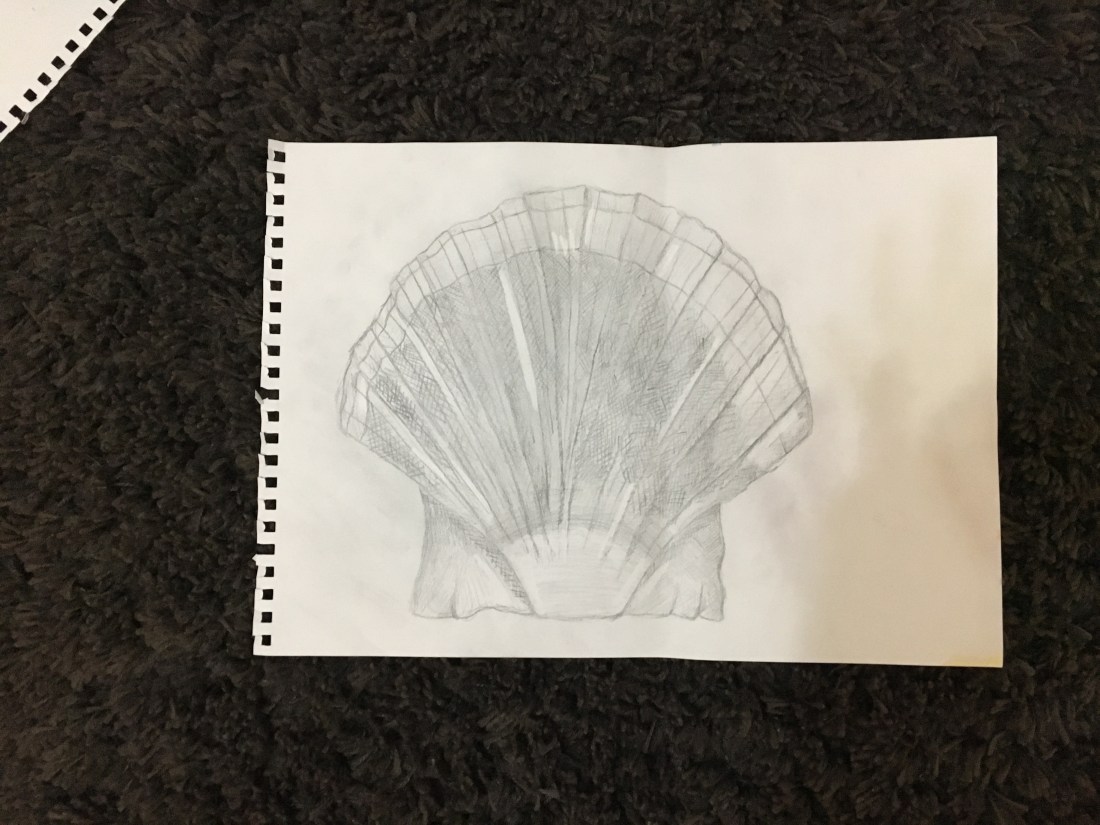
I found this exercise enjoyable to really go to town on making the object I chose look 3D and use multiple methods to enhance the dark and lighter tones, I decided to go with a shell seen as I found it was the most interesting to get different textures and lighting onto the object. Below is a picture of my result:

IMG_6927 2.jpeg

As shown on the picture I used a lot of cross hatching to really pop out the darker tones on the shell and I used the eraser occasionally to show the light tones on the shell. I enjoyed using the cross hatching to show the dark tones and using that technique throughout this piece I found worked out and was quite effective, I also thought enhancing the lighter tones with the use of an eraser was an effective use and I’ve learnt a lot about how you can show tone through using a pencil.


All in all I am happy with the result of this piece and I think the techniques I have used turned out to make the tones look effective throughout this piece. I have learnt a lot about different ways to preform toning and how to create different ways of using and showing tones that I will take on board and use throughout my work.


Review of part one:

For this piece I found the best technique for this exercise was the cross hatching- I found this the most effective due to it showing the darkest tones and being buildable to really make some effective tonal work.

IMG_6962.jpeg

IMG_6963.jpeg

Research- Negative and Positive space.

Negative and positive space.

For this task I have looked into negative and positive space, for this I have looked into a range of different artists to get a feel for how affective this technique of work can be. I wanted to see how different artists from around different era’s have used this technique within their work and to see how it stands out from different work.

James Abbott McNeill Whistler.BN-JE194_0703WH_M_20150630142403.jpg

This piece of work was significant in it’s time of release in 1871, this piece was different in this era due to the angle of his mother, back in this century it was known for portraits to be taken at a face on angle so the model was towards to painter, this work was not common in the 1800’s as his mother is sat to the side when being painted. This image shows the real impact of negative space due to the painting on the wall of the woman, this gives a sense of reality to the painting and shows you the life of what’s going on outside of the painting, the fact that it makes the viewer not just focus on the mother but also the rest of the picture, this shows how clever using negative space can be.

Rene Magritte.

My next artist I found interesting, the work is different and unique, his way of making art is to change the way we look into things and stretch the viewers beyond reality. His work amazed me as I looked more into it and how he changes perspective when you view his work.

Decalcomania 1966. Mysterious paintings by Rene Magritte

This image uses the negative space to represent the outline of the man, this image lets the viewer look in two sides of the image but see the same thing. The image is clever in the respect it has two sides of the image and the view focus’ of both sides. The artist uses the negative space of the image to show a different painting and to use it to let the viewer have two main things to focus on.

Patrick Caulfield. 

This artist I researched is more contemporary and use’s negative space in a way to enhance the image, he use’s the background as the main image. His work is bold, as I looked into his work I found it different to the other artists I have researched in the fact his work is more cartoon effect and he uses his negative space in different perspectives.

This image stood out to be as the artist has twisted the allusion in the main focus of the image being the background, the negative space has been made to be the full image, his work stands out in the fact the colours he uses for his backgrounds. The glasses stood on the shelf have been focused but the background is the full image. It shows how clever negative space can be, in the respect that it can change the full dynamic of the artwork and can create such different allusions.

Image result for patrick caulfield

This image by the same artist creates the same allusion but relates to the first artist I research in the fact he has used the full image as his space, the negative space has been used to connect to the viewer and there is not full part of this image to focus on and that’s what is clever about this artists work. They use the full canvas and don’t just use one part to focus on.

For this task I have discussed the meaning of negative and positive space and how it really can make a difference on how the art is shown. I think I have learnt how the negative space can be used in different ways and got inspiration from other artists who have used different ways for this technique. I have found this task beneficial in the fact I can see how different art can be made through negative space, it has shown me how I can change the way I work with composition in my work.

Research on still life.

– Research on still life.

Historical still life.

For this research point we need to research into traditional approaches to still life and get an idea of the genre we’re entering to learn more about it. For this I did some research first looking into the more traditional and historical artists and how they took approaches onto still life.

Firstly I came across an artist called Evaristo Baschenis with his piece of work called ‘Still-life with Musical Instruments and a Statuette’ this was done with oil on canvas in 1660. This piece was done with dull lighting and a realistic take on the image in front of the artist. Seeing this artist has shown me that in the 1600’s the representation of still life was realistic and shown exactly how shown when viewing.

In the image above you can see the accurate representation of the lighting, it shows the tone and colours changing matching the lighting entering the image. Seeing this artist’s work and looking into various different types of work in these era’s, I found that historical artists did more realistic representations of the layout ahead of them, the work they did was accurate in the lighting and the toning on the objects. The colours used are more dark toned and the lighting is done which is a common feature of still life in this century for it to be dark with little lighting.


I then came across an artist called Paul Cézanne, the piece I came across was called Still-life with Bowl of Fruit done with oil pastels on canvas this piece was done in 1893. This piece of work shows off how it was shown back in the 1800’s for still life and how the representation of the style was.

As shown in the image above the still life form was more traditional as in it was done to accuracy and done as a realistic representation of the image the artist would see. The imagery is bright and coloured with more primary colours than the previous artist I came across in the 1600’s, the work seems less realistic but still has the accurate toning and contrast on the objects. The lighting in this picture is more bright and the full image has more lighting than the previous, the toning and dark tones are only in the areas of shadows.

Contemporary still-life.

Finding a more contemporary famous still life artist was more complicated therefore I went on google and did my research throughout that platform, when doing this research I found that all types of contemporary art were so much different to the past centuries, modern still life art is more bright and different, artists have had a new way of seeing this type of art and changing it’s view, it doesn’t have to be an accurate representation of what you see it can be formed into whatever you imagine. Different media’s are used and new technique’s. Early Morning Tea ~ Contemporary Still Life by Laurie Justus Pace by Laurie Justus Pace

With this image by Laurie Justus Pace called ‘Early Morning Tea’ it shows the brightness and different techniques contemporary artists use and get inspired by. For this piece of art I found it fun and it still represented the items the artist was looking at when creating this art. I think that the techniques in her use of the brush really show the different style to the previous decades.

The materials we use today on our art are different, the way we express are is more imaginative and we use colour to light up an image and show an object for a different way than it really is, in the 1600’s they would express art through realistic form and create art to look real. But as decades went on we now explore art in different ways, the colours we use, the lighting we use the techniques within our materials are new. We show things for what they are but use different ways to express our sights. We use different materials and use them in different techniques to create expression, the composition hasn’t changed much, we still line objects up and create different ways to place them yet we change the way we represent things.

Project 2 Exercise 4- Shadows and reflected light.

Shadows and reflected light.

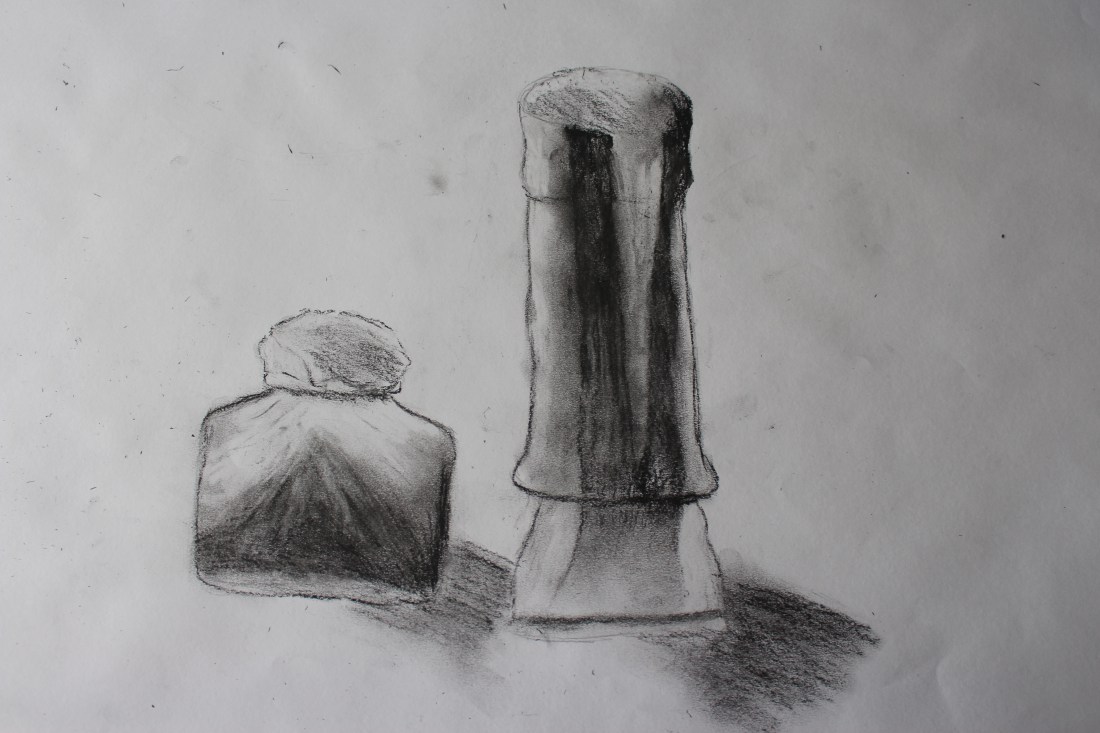
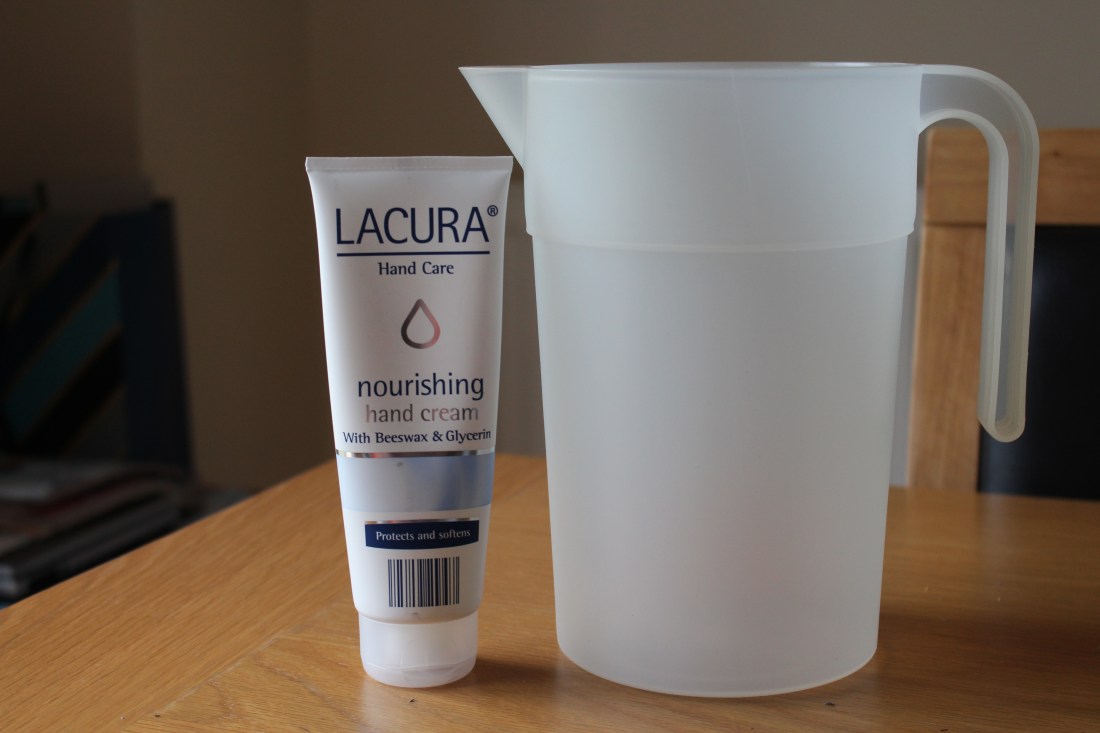
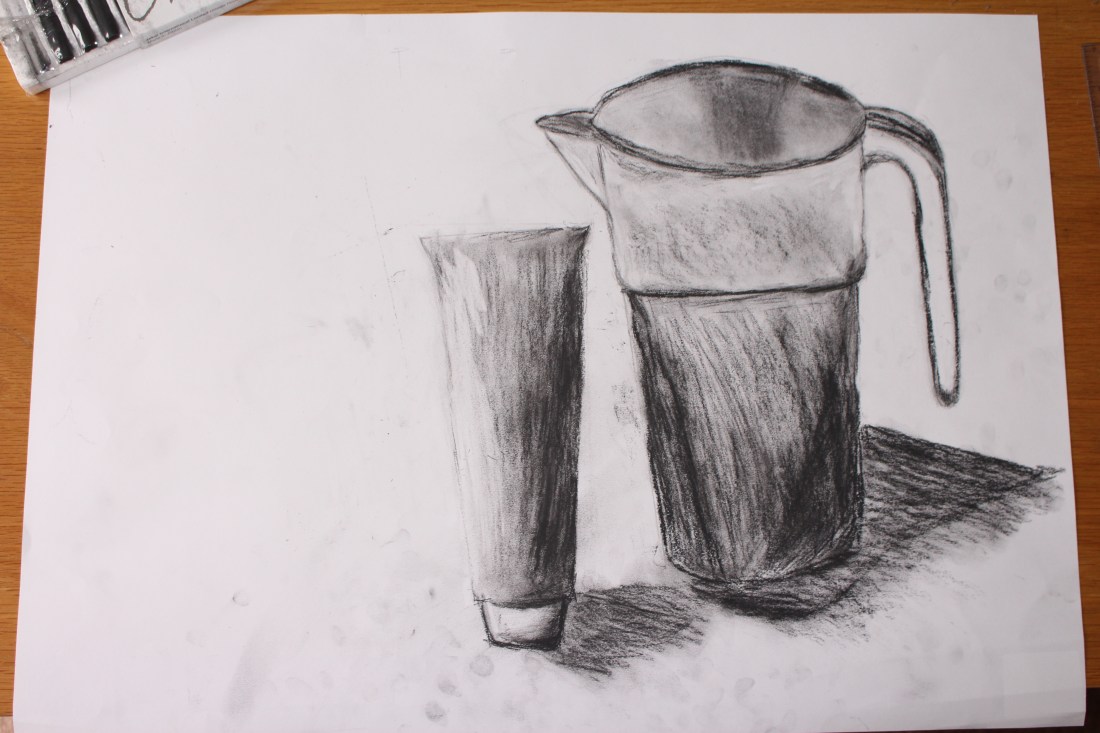
For this exercise we were asked to place to ceramic objects on a surface with light sighting onto it, once we’d done this we’d have to draw them both clearly showing the lighting (shadows) using a charcoal stick.

For this task I decided to use charcoal as it has worked well for smudging and toning in my previous exercises and I felt most comfortable using this material. I did find this task more challenging as we had to clearly show blocks of shadow and I’m not used to doing gradual toning from where the lights change.

Below is a picture of my outcome:

IMG_2638.jpg

This piece I wasn’t my best work I did find it complicated to show such big blocks of colour of the shadows and not be able to fully tone the objects but it was a good exercise to get used to how lighting works onto objects and how it’s different all the way around. I have learnt how different lighting works with different textures and how shadows and lighting focus on different spots and not just the same spots. It was an interesting exercise to do yet I’m not completely happy with my outcome, I do think it’s a clear indication of the task but I feel like I wasn’t in my best element for this task and wasn’t used to the type of drawing. Yet I am happy with experimenting and finding out how lighting does affect drawing with different textures and how shadows do form.

All in all this exercise was complicated in coming out of my comforts own yet I have learn a lot about drawing and how lighting works that will be handy to add to my drawing skills.

Exercise over view and research.

Overview of the last two exercises.

The last couple of exercises I did find more difficult, for example realising the different lighting and noticing the different in tones was tricky using natural lighting, I do think it might’ve been easier to do using a lamp yet I made it work with the natural lighting. I haven’t done tasks like this before so I did find it more tricky to do at first because it was all new but I found myself getting more comfortable doing it after the first exercise.

Doing these exercises has opened my eyes to how tone and shadows actually do form onto objects, it has helped with me understanding how light actually does work on objects and it’s not always just a simple one shadow on the side it all differs and I learnt that a lot during these exercises.

All in all I have found the tasks more challenging seen as it was new to me and I haven’t trialed with this type of drawing before yet it has helped me develop on my tones and knowing the light better on my drawings.

Research.

Odilon Redon.

For this research point we were shown this picture:Related image

In this picture you can see the tones he’s used for the lighting throughout the trees, and his dark blocks of sharp tone really stand out and show the definition on the trees. You can see how the artist has used different markings to represent the lighting, for example at the bottom of the tree trunk on the right tree there is dots for where he has used his markings to show a lighter tone to show the lightest bit of the picture. The artist has used different mark makings throughout this drawing to really show the dark and lighter tones, throughout the shadows there is close lines to show the real darkness of the image.

Into my further research I found another picture by Odilon Redon that shows tone and shadow work, this image was called ‘Head of a Martyr on a Dish (St John)’ here is an image of it below:Image result for Odilon Redon


I chose to use this image because it shows a lot of different mark making to show the dark and lighter tones in the image, in this picture you can really see some good effects the artist has used to show the tone. For example in the dark tons on the head you can see how the artist has used cross hatch how enhance the darkness and show how dark it really is. I found this picture really shows how markings can create an effective and tone filled drawing and how they really do enhance a drawing.

By looking at this artists work I have found a clear understanding as to why it is effective to use markings and to use these techniques in everyday drawings to really show the tones and shadows in the work, even the lighter parts of an image can be marked to show the lightness. I have learnt that markings do make a different and it’s a different technique to just shading but still makes an image just as effective.


Project 2- Exercise 3 Creating shadow using lines and marks

Creating shadow using lines and marks.

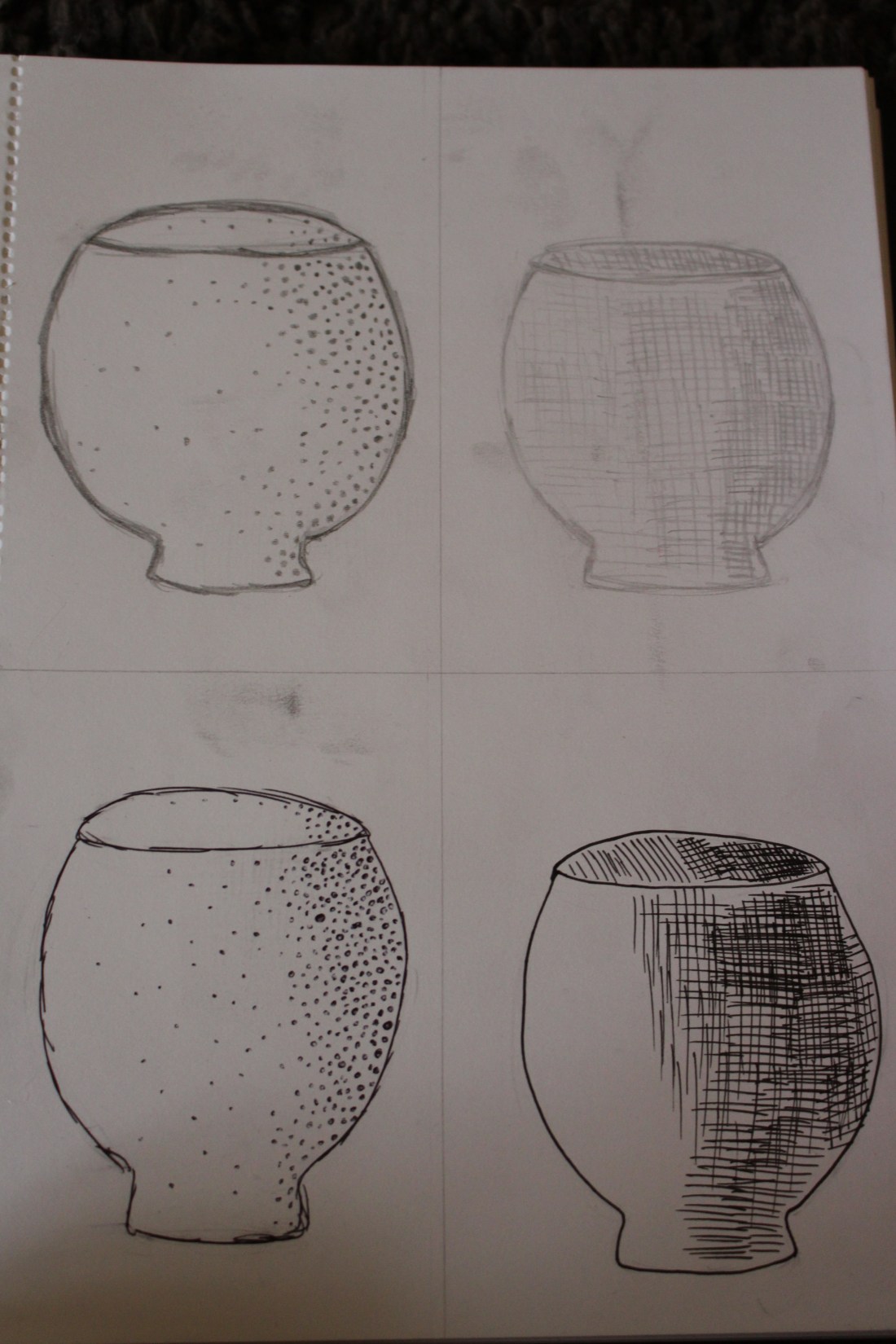
For this exercise we had to split a sketch book page into four and draw a single object using 4 different materials, for this I chose to use a fine liner pen, biro pen, pencil and graphite. We had to make marks to show the shadows, I decided to do two sections drawing cross hatch and dots for the other two.

IMG_2607

In this exercise I found it interesting in using different marks to show the darkness on the object, I did find I liked using fine liner best therefore I furthered this on for the next task. But I like how this work did turn out and it was different to how I usually display my tones during drawing.

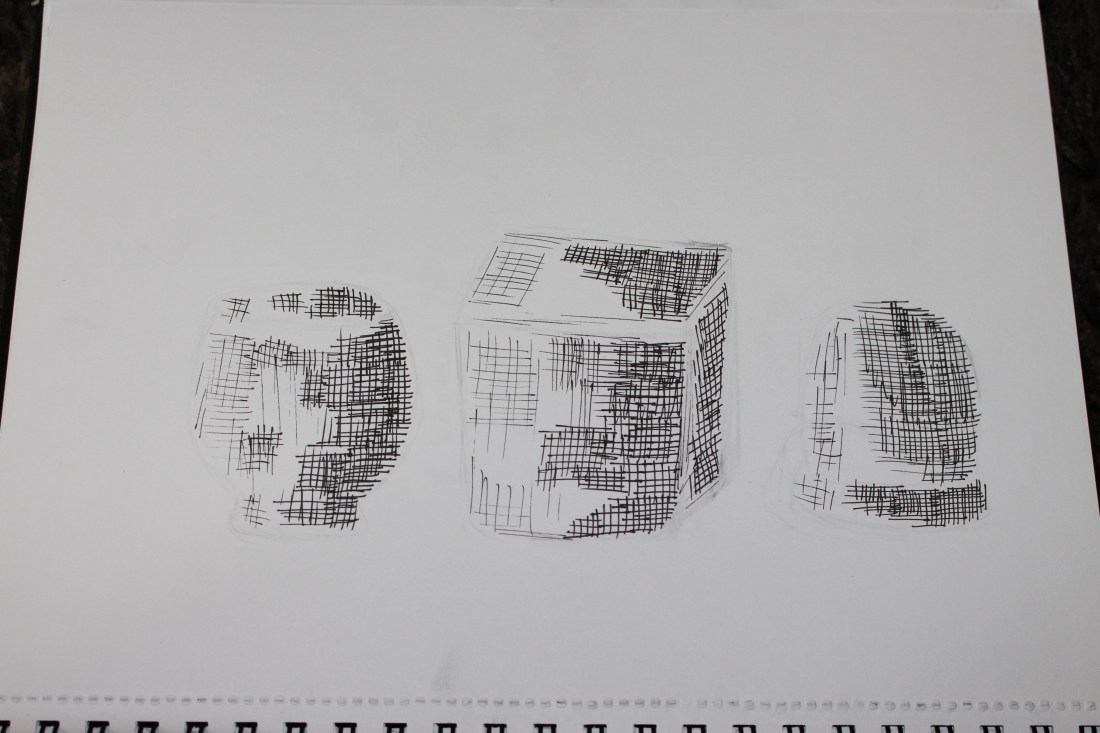
In the next task we were told to gather 3 or more objects and not use an outline to display the object when drawing, to just just the marks to indicate the objects. I found this task more difficult due to not having outlines and being worried you can’t tell the shape of the object, yet I think it turned out pretty good seen as I haven’t experimented with this type of shadow marking before.

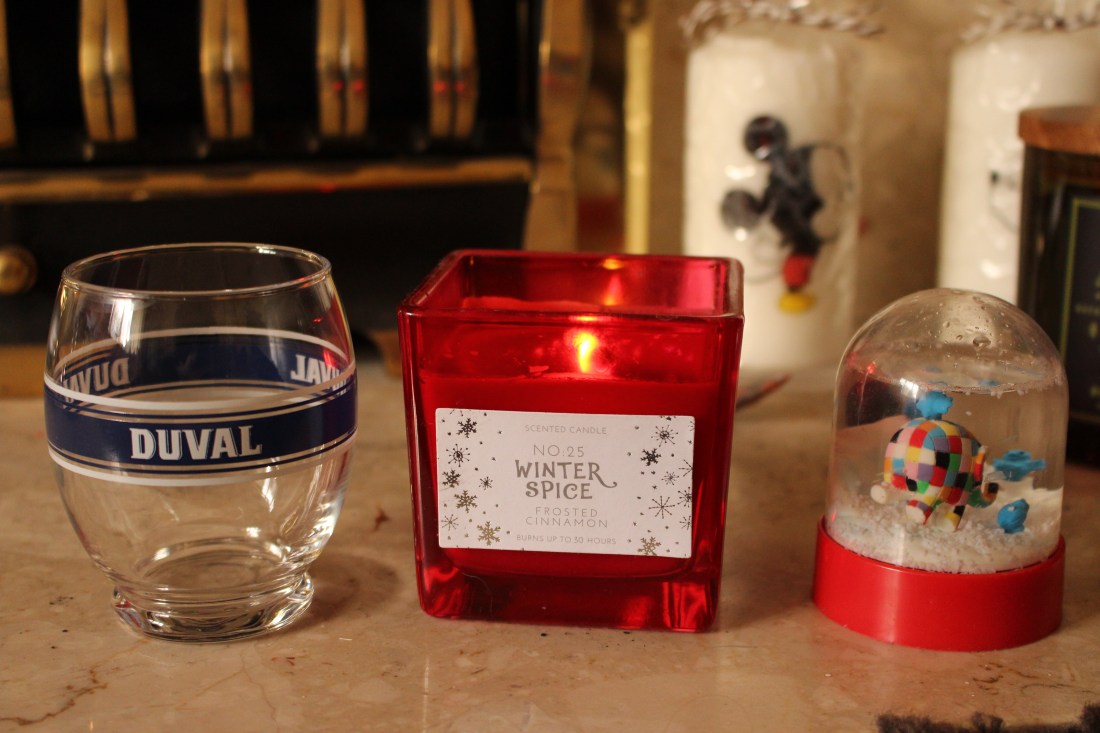
The image below is a view of what I was trying to recreate:

IMG_2612.jpg

For this group of object I didn’t want them to be close together because I feared that I wouldn’t be able to show the objects apart and I didn’t want it to look like they were all merged and you couldn’t tell them apart.

IMG_2610.jpg

This is a picture of my outcome, all in all I did find this more difficult due to having no outline yet I dod think you can tell what I was trying to recreate. I do think this may have worked better if I used either graphite or a pencil because I would have been able to do different tones and work on the lightness easier. Although I am happy with the result and I think you can see the the shapes.

All in all I found these tasks interesting as it was more challenging on my ability to be able to show shadows using different marks rather than normal shading which is what I’m used to, but it was a different way and I think the results were good.


Project 2- Exercise 2 Observing shadow using blocks of tone.

Observing shadow using blocks of tone. 

For this exercise we were told to get two objects and draw the two objects onto A1 or A2 paper using either charcoal or conte sticks, for this task I used A2 and used charcoal as I thought it was be the best to show dark tones and gravitate into lighter tones.

This is an image below of the two objects I chose and how I chose to place them, I wanted natural light therefore I sat near out sliding doors to the garden and a lot of light was then able to hit onto my objects.

IMG_2598.jpg

After laying them out I began to draw the objects marking sure to mark where I saw the shadows and the lighter light on the objects, I found it more difficult than I’d imagined with the charcoal to get different tones seen as it was such a dark colour yet I went in with an eraser at the end to enhance the lighter sections.

Below is a picture of this result:

IMG_2602.jpg

As noted above I did find it harder to get the tones right of this piece and I wish I made more of an effort to use the space of the A2 paper yet it was again my first time trialing something like this with charcoal so I am happy with how it turned out in the end, I found it was easier to handle when going in with the rubber and that worked to my advantage.

All in all I found this a more challenging task due to the charcoal not toning how I had first imagined but I think it was enjoyable to see the different lighting and to focus on the main light on the objects.

Project 2- Exercise 1 Groups of object

Groups of objects

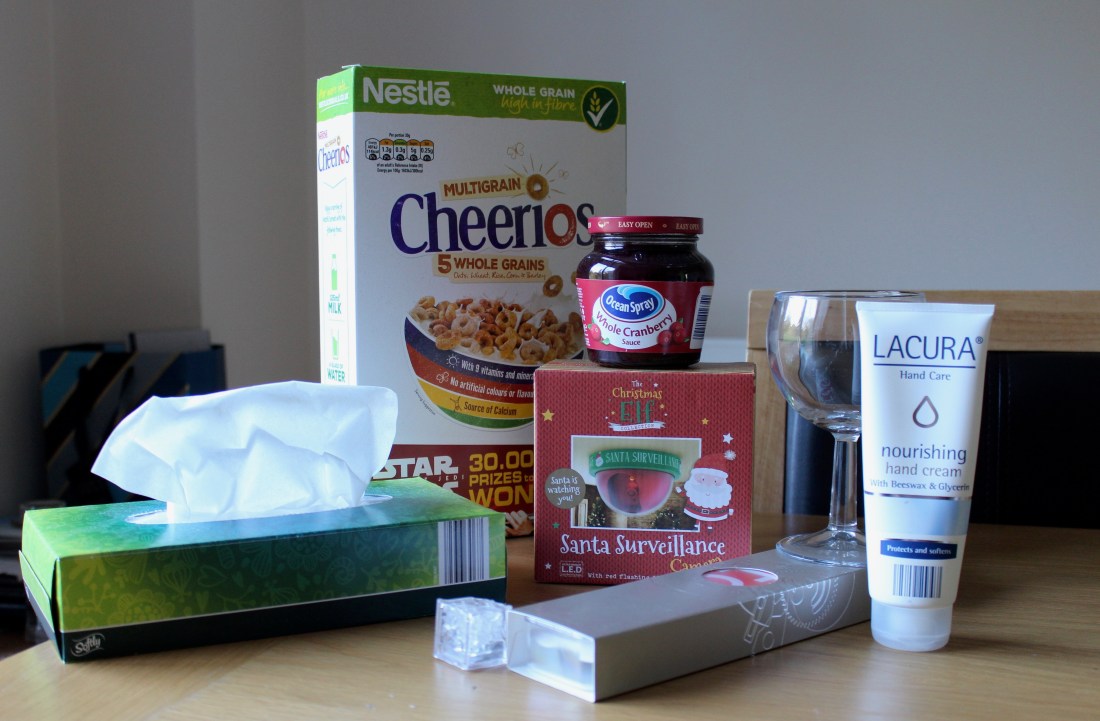
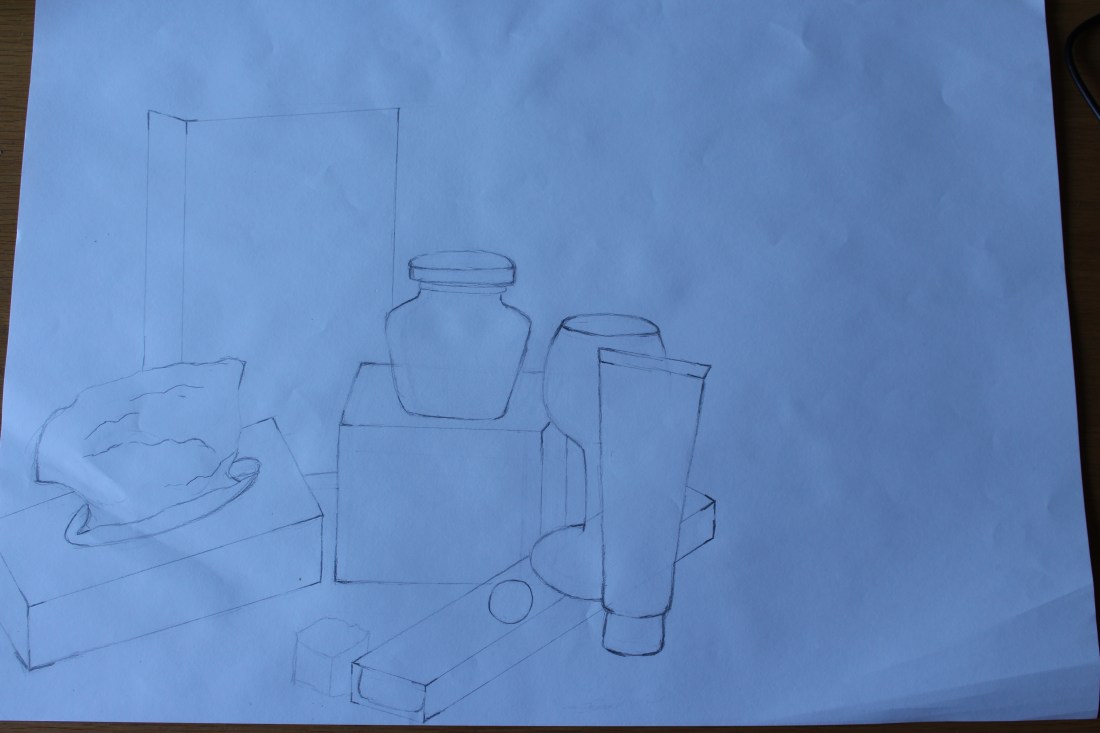
For this exercise we had to gather a group of 8 objects and arrange them on a surface, after this we had to sketch them out but keeping in mind to imagine them transparent keeping in mind the weight, I found this task quite challenging as I normally like to add tone to make the object 3D yet it was a fun exercise to do to really get the look of the size of objects and how they compare when drawing.

IMG_2595

This is the set up I had arranged and I found I did get a clear accurate result, I wanted it to look quite gathered rather than having everything placed separately and I found this lay out worked well for me. This wasn’t the original set up I had placed, I just forgot to take a picture of my view and had to try my best to match the view I had. For this task I chose to use graphite as I felt it was a nice smooth, easy gliding material for this type of task.

IMG_2593.jpg

This was the result of my work and I do look at it now and wish I had drawn to a bigger scale and made more use of my A1 paper yet I’m happy with how it turned out seen as it was the first time I’d tried drawing objects like this and I think the picture does match the look of my drawings.

All in all I found this was a fun exercise but I did struggle at times to get the right scale seen as I haven’t experimented with this form of drawing before, I am happy with how my result has turned out.

Project 1- Exercise 2.

Experimenting with textures.

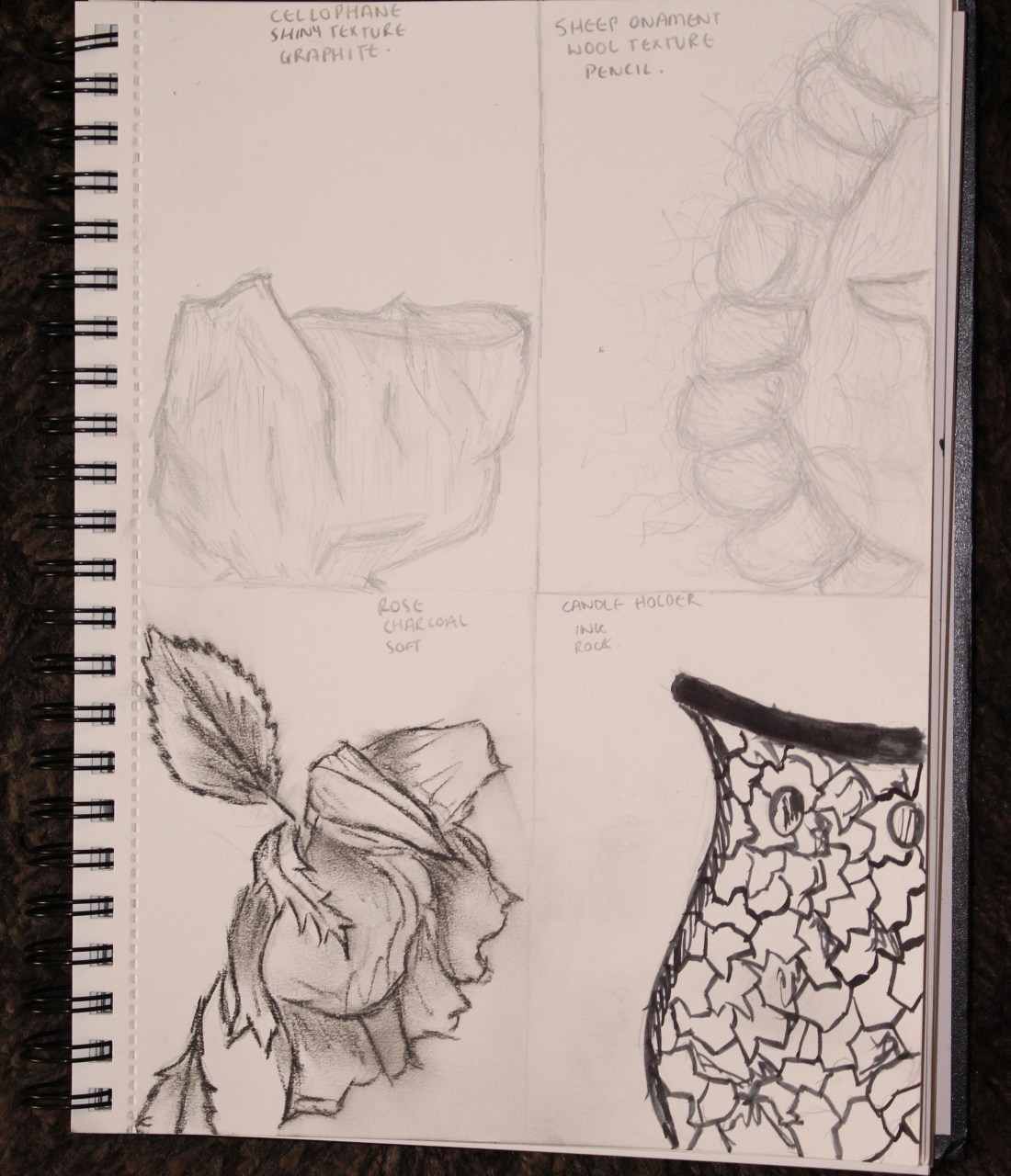
For this first task we were asked to gather a bunch of objects with interesting textures and then draw elements of that object to show off their textures. With this exercise I decided to pick 4 objects and recreate those textures in a range of different materials.

Below is a picture of the result:IMG_2580

For these drawings I used the materials of : graphite, 2B pencil, compressed charcoal and ink using a paintbrush.

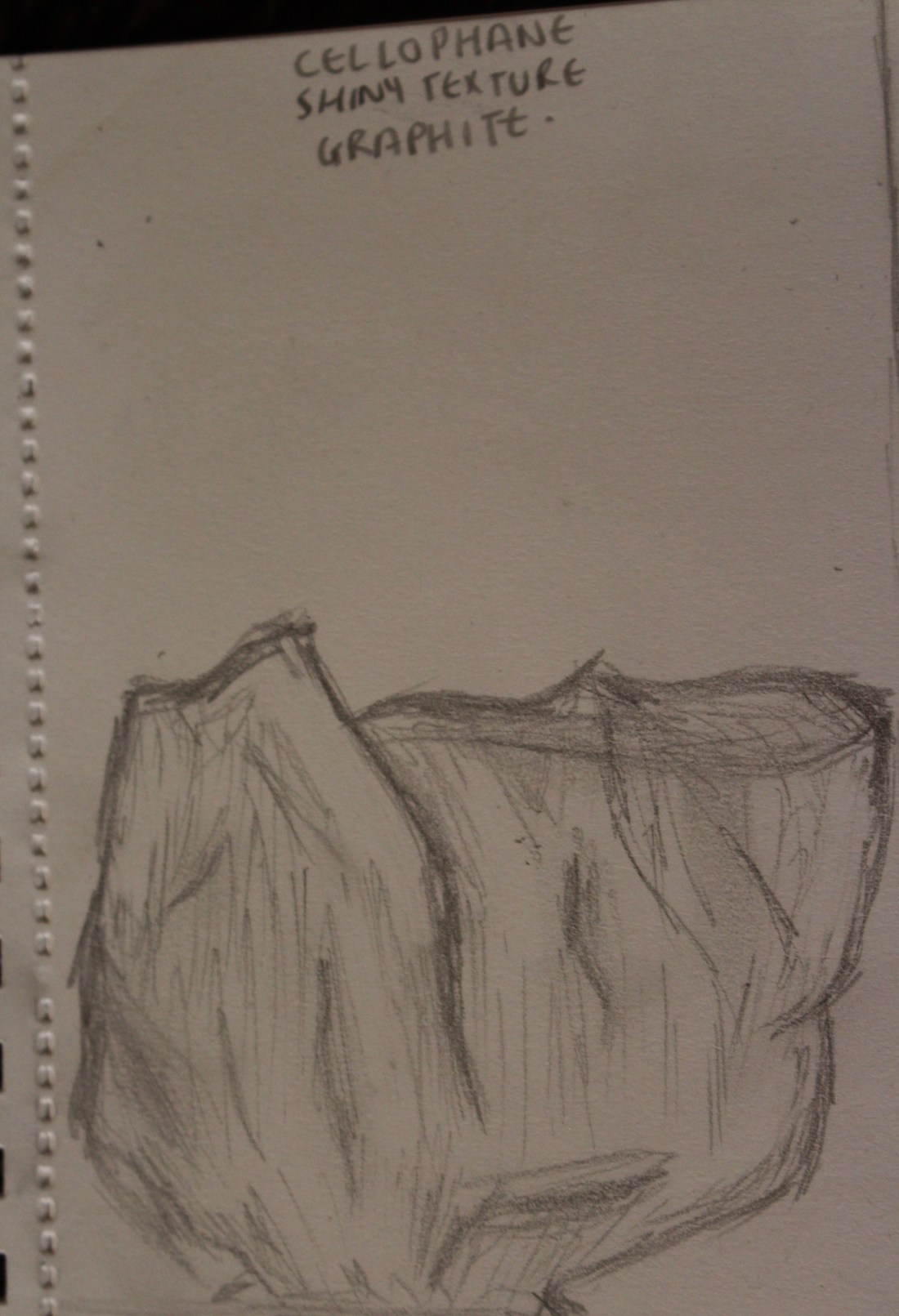
Section 1- Cellophane wrapper.

The first section I did was a close up on a candle I was gifted which was wrapped in cellophane, I chose to use this texture because I thought it was interesting in the sense of its crunch when you feel it and the harsh crinkles it has when wrapped.

IMG_2585

I decided to use graphite to produce this piece due to it being easy to glide and make various quick marks with, with graphite I was easily able to erase any lines away which I wanted to do to give the transparent look and shine that the cellophane has. I think using the graphite and the smudges and tone does create the right texture look I was going for and I’m happy with how this image turned out, it gives an overview of how the texture was crinkled as well as looking transparent.

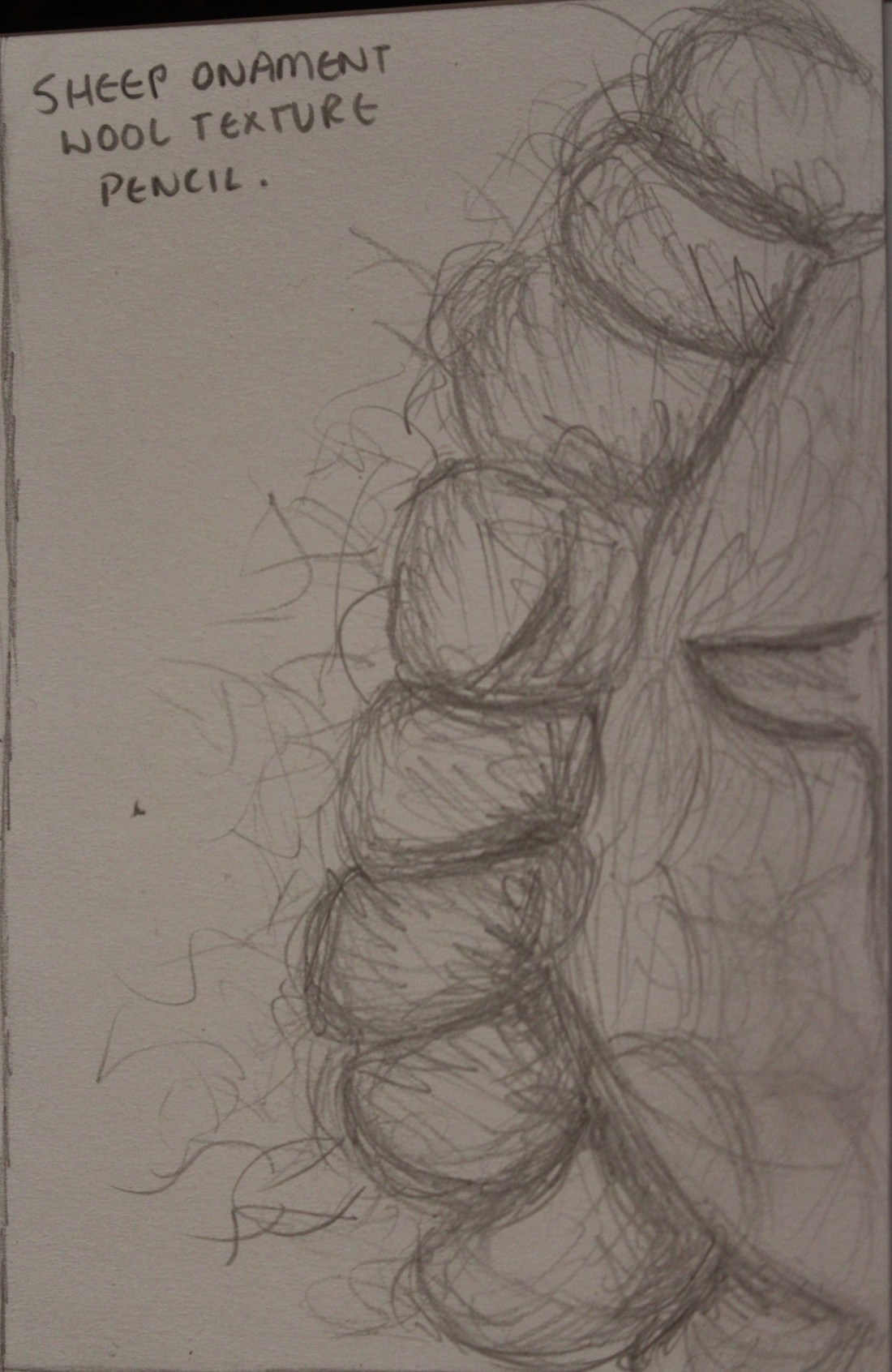
Section 2- Wool ornament.

In the second section I did as it was an interesting texture to recreated, I wanted to use this because it was a different texture to draw, the texture was soft yet firm in the way it was placed and interesting to see every piece of hair which created the wool.

IMG_2586.jpeg

I drew this piece by using a 2B pencil, I found this was the best material for me to use due to it being a soft texture to draw and to be able to get the real effect of the wool, it was an interesting thing to draw as the texture isn’t something I’m used to drawing yet I don’t dislike the outcome, I think it gives an accurate sight of the texture. I wanted to add tone in places where the light wasn’t hitting therefore I pressed harder on the insides of the wool which is where the ornament pieces met. All in all I’m happy with the effect this piece gives and I found the texture interesting to represent.

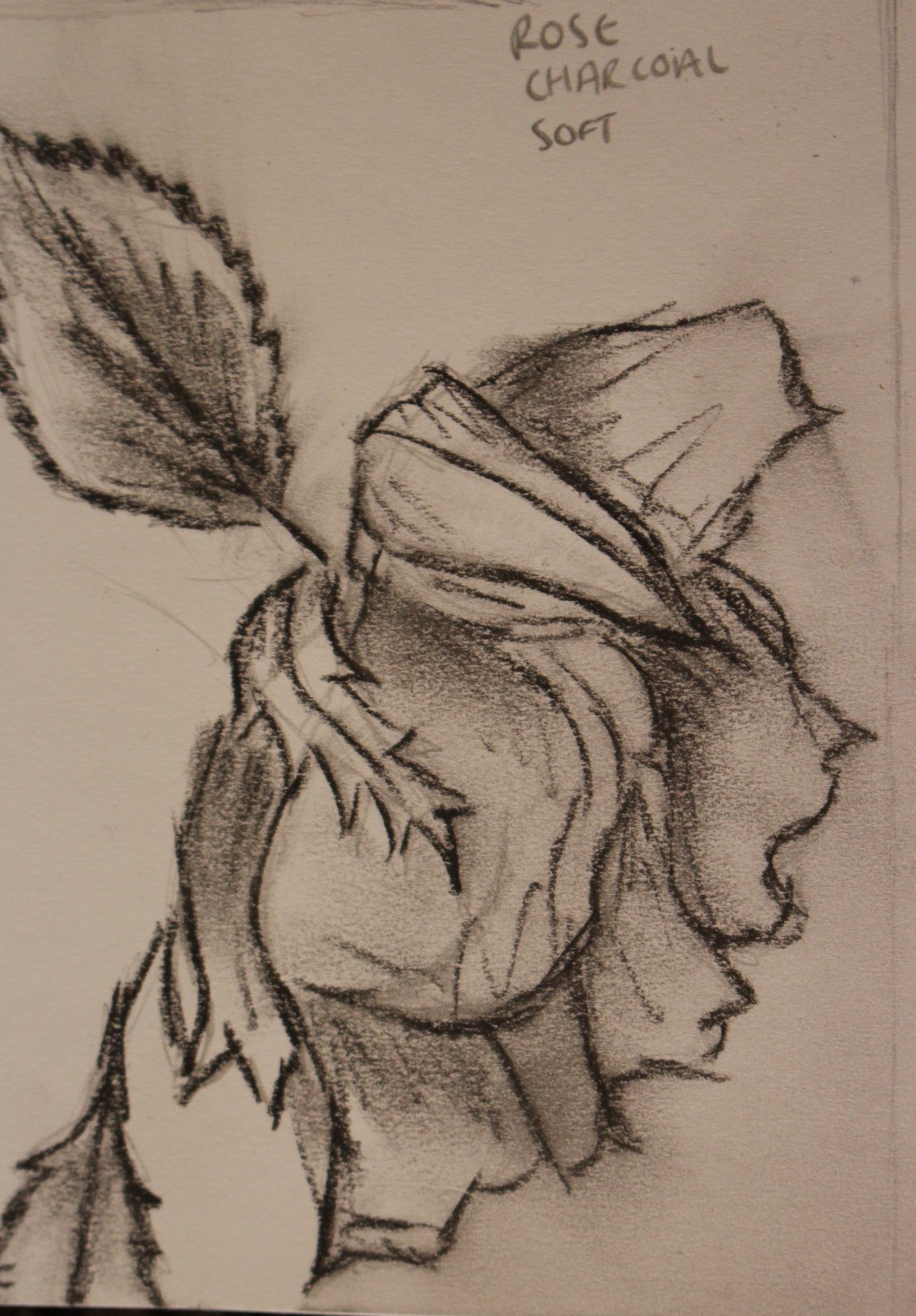
Section 3- Rose.

The third section I wanted to use compressed charcoal to get a different material to work with and I wanted to get a different material that I could smudge with, I thought the rose would be a good object to use seen as you do get some nice softness with the petals and it was an interesting texture to recreate.

IMG_2583.jpeg

In this piece I used compressed charcoal, I used this texture for the rose as I wanted to smudge this piece to get toning in for where the light was hitting onto it, I liked using this media as I think it did give a good look at the texture of the rose and can show the crisp edges of the petals. I liked how this turned out I think it’s a good representation of the rose, I do like how the sharp likes show the texture of the edges yet the smudges show the real softness of the petals.

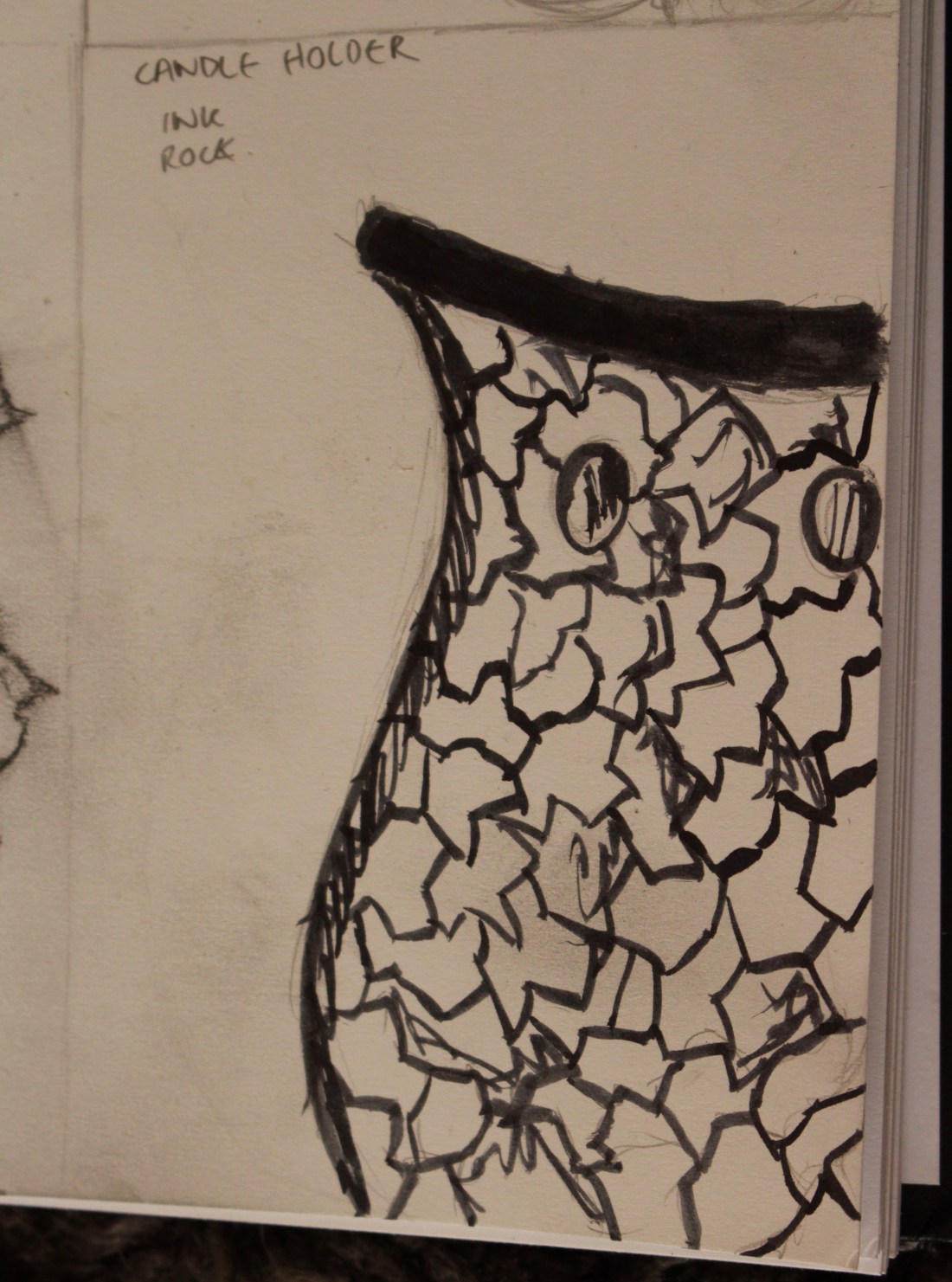
Section 4- Candle mosaic holder.

I decided to use this object as I thought the textures of the mosaic was interesting and the ways they joined together different, I wanted to show the sharpness of the texture and the elegance of the pattern.

IMG_2582

For this last piece I decided to use ink as I found it would show the sharpness of the edges on the mosaic and also have a more accurate media for this object. The texture does show on this piece yet I’m not too please with the toning and I think I perhaps would’ve been better using the pencil for this object to really show the detail of this piece or maybe using a slighter paint brush. I do think you can tell what I was trying to create and the slabs of pot do show yet it wasn’t as effective as I would have hoped, I did try my best to get some tones in there yet it isn’t as detailed as I’d wanted.

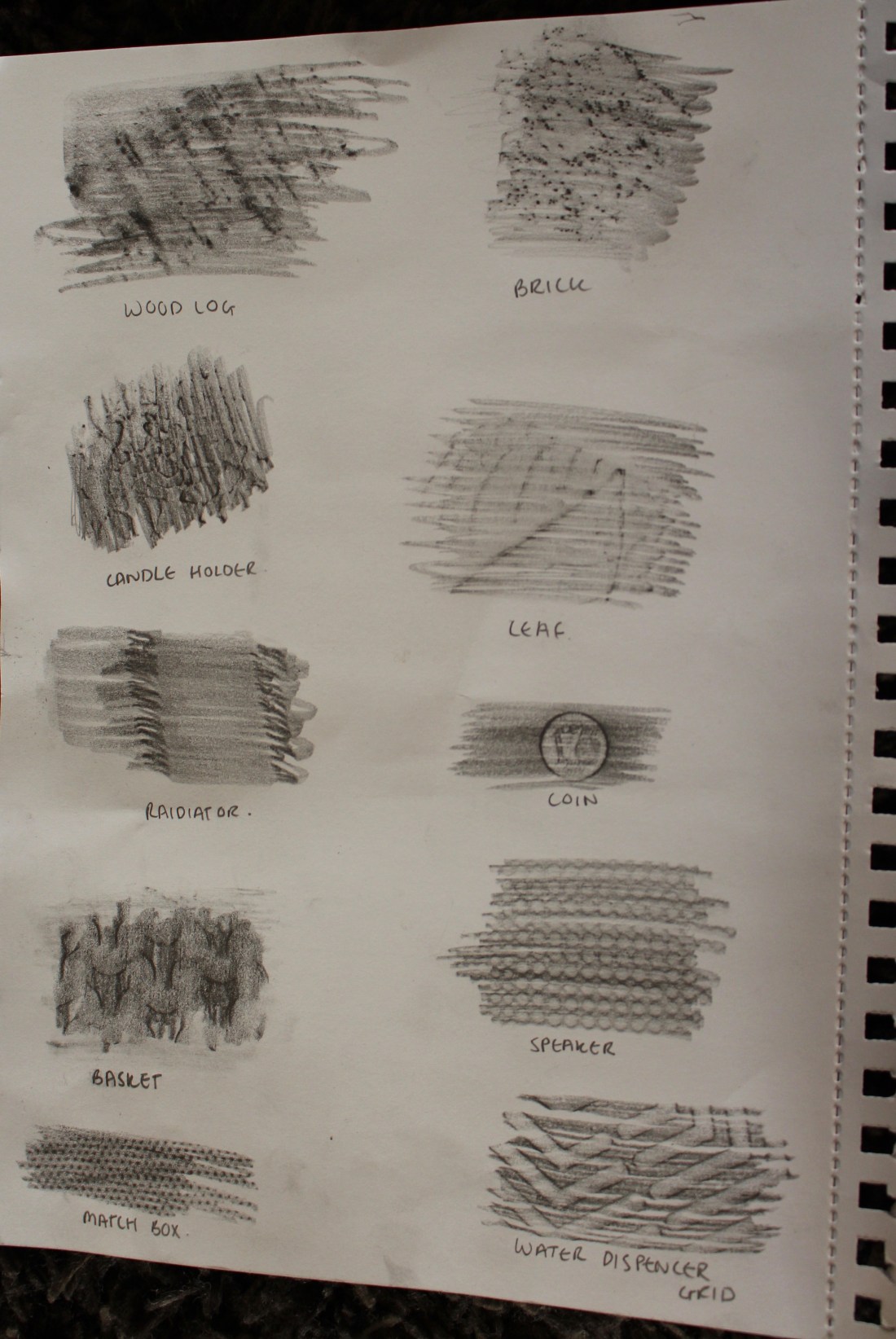
Frottage experiments.

For the second part of this exercise we had to create frottage therefore I ripped out a page of my sketch book so I didn’t get all of my pages dirty! Then I went out and inside my house to find fascinating textures, I found myself finding all sorts of things but some didn’t turn out a well as I’d hoped and others really turned out well and the textures really came through. IMG_2588.jpegI decided to do the markings using graphite as I thought it would have a better outcome when resulting to showing the different textures. I was pleased with how most of them turned out and it was an interesting way to see different textures and the results of their markings, the log wasn’t as successful as I had’ve hoped yet it still shows a little of how the texture looks. The leaf was a difficult one to get markings from although you can faintly see the outline, non of the markings were a complete fail and didn’t work so I was overall pleased.


Project 1- Exercise 1.

Experimenting with expressive lines and marks.

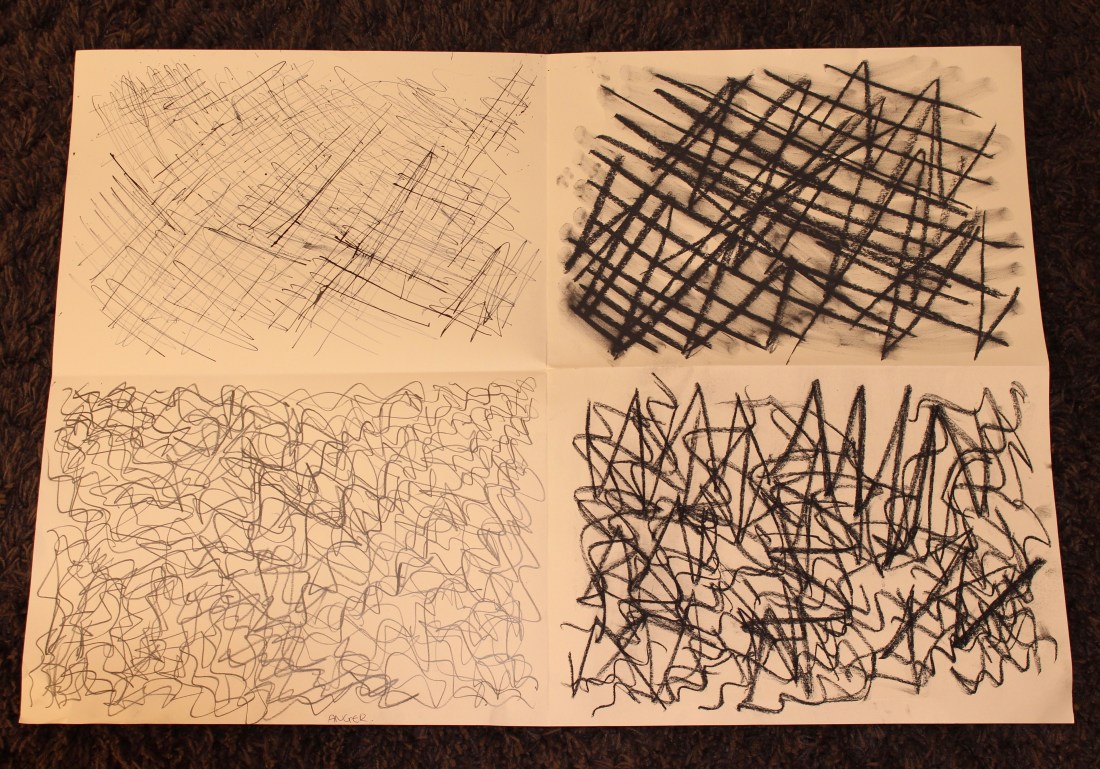
Anger

My first piece was influenced on the emotion of ‘anger’ for this piece I experimented with: Compressed charcoal, Conte sticks, ink with a cocktail stick and graphite.
IMG_2552.jpeg

The materials in what order: Top left- ink with cocktail stick, top right- charcoal , bottom left- graphite and bottom right- conte stick.

For this emotion I found it hard to get into the mood of anger yet once I tried I found I was putting a-lot of pressure into the materials to create the marks I did. With the materials I used I wasn’t caring about what was happening and what type of marks I was making with my hand. I just marked the paper with aggression which created harsh movement onto the paper with the sharp lines and bold marks. A-lot of my mark making turned out messy, which I doesn’t usually gravitate to. In the top right I found myself not caring for to smudge the charcoal and created dark patches with a hard hand. All in all this emotion wasn’t the nicest to feel and not normally the emotion I go for when usually creating art yet it was fun to try.

Calm

My second piece was influenced by the emotion of ‘calm’ in this piece I experimented with: Compressed charcoal, Conte sticks, ink with a cocktail stick and graphite.
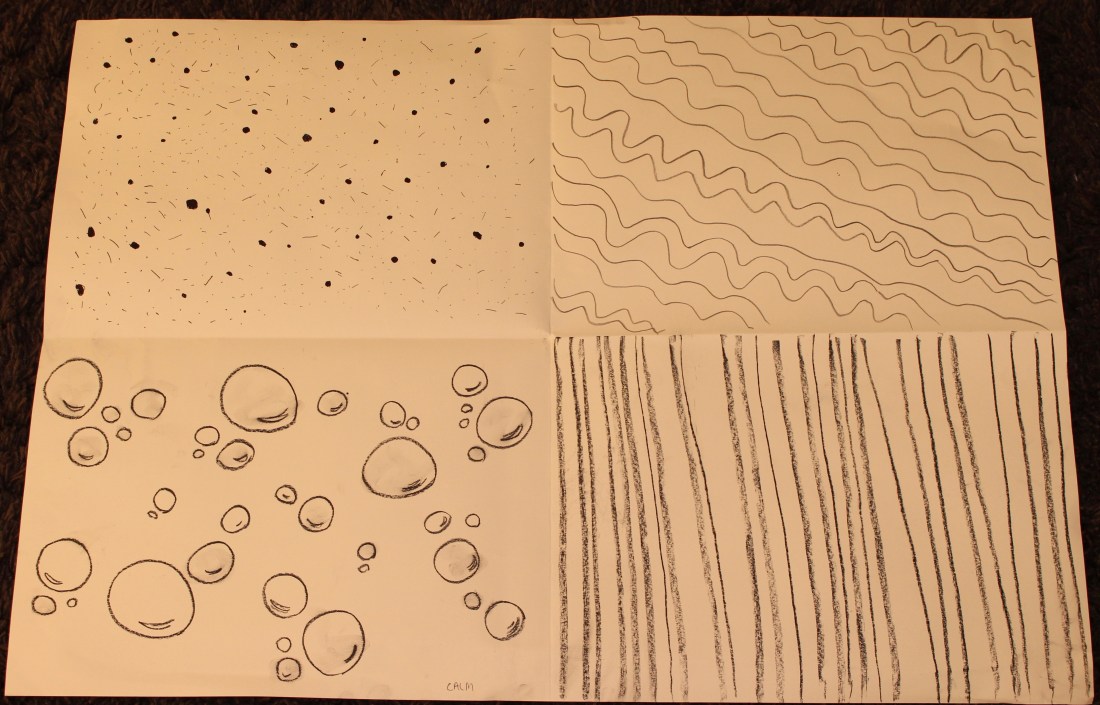
IMG_2546.jpegThe materials in what order: Top left- ink with cocktail stick, top right- graphite , bottom left- charcoal and bottom right- conte stick.

For this emotion I found it more relaxing, it was easy to get to this emotion as it’s much more casual the normal emotion I have whilst creating artwork. In this exercise I found to have a gentle tone with my work and create marks which represented objects or things which are calming. For example with the top right I created these wavy lines which I see as the ocean and the wave coming in to the beach which is a settling thought of holidays and fun times which I find calm me. Then again in the bottom left I found myself drawing bubbles using subtle smudging to show the glisten in the bubbles. All in all I found this emotion  a chilled approach to the mark making and I wasn’t using much pressure onto my materials at all, my movement was a-lot more refined. For this piece I wasn’t happy with the way my lines with the conte worked out as I didn’t make accurate straight lines.

Joy!

With my forth piece the marks were represented with the emotion of joy, again with this experiment I used:Compressed charcoal, Conte sticks, ink with a cocktail stick and graphite.
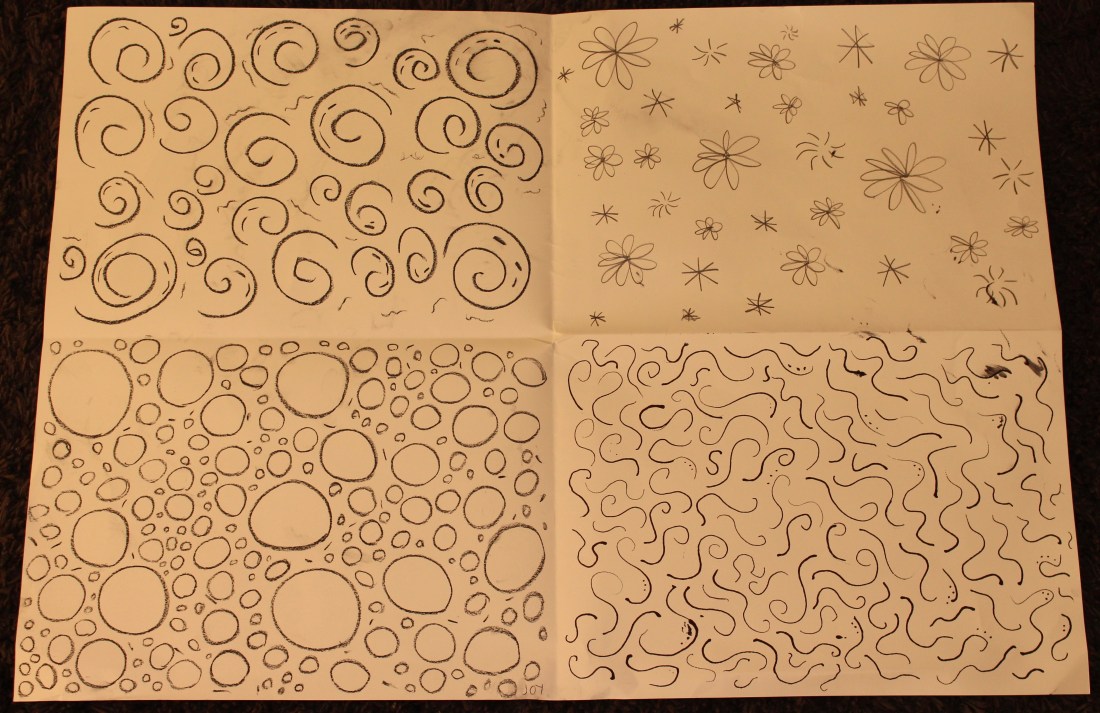
IMG_2544.jpegThe materials in what order: Top left- charcoal, top right- graphite , bottom left- conte stick and bottom right- ink and stick.

When making marks to this emotion I found it very fun, I enjoyed this feeling when creating and I made some really happy toned marks. With this piece I felt my hand was relaxed and excited to make these marks, I took inspiration from things which give fun and excitement. In the top left these have always reminded me of birthdays from the wrapping paper and the turned excitement you get in your tummy. The top right was meant to be inspired by fireworks and the blasts of colour in the sky although this section I wasn’t happy with as it didn’t turn out as well as I’d planned, I think I could’ve done this idea better with the media of the ink. The ink and cocktail stick weren’t working out as well as I’d hope on my other pieces therefore I changed my material to the other-side of paintbrush to get more precise mark making. All in all I liked this emotion it was a happy piece to make and got me excited to make joyful mark making.

Trust

For this last piece we were asked to come up with our own emotion, I chose to use the emotion of ‘trust and trusting somebody’ I thought this emotion was used everyday in people therefore I would represent the feelings we may get. For this experiment I used:Compressed charcoal, Conte sticks, ink with a cocktail stick and graphite.
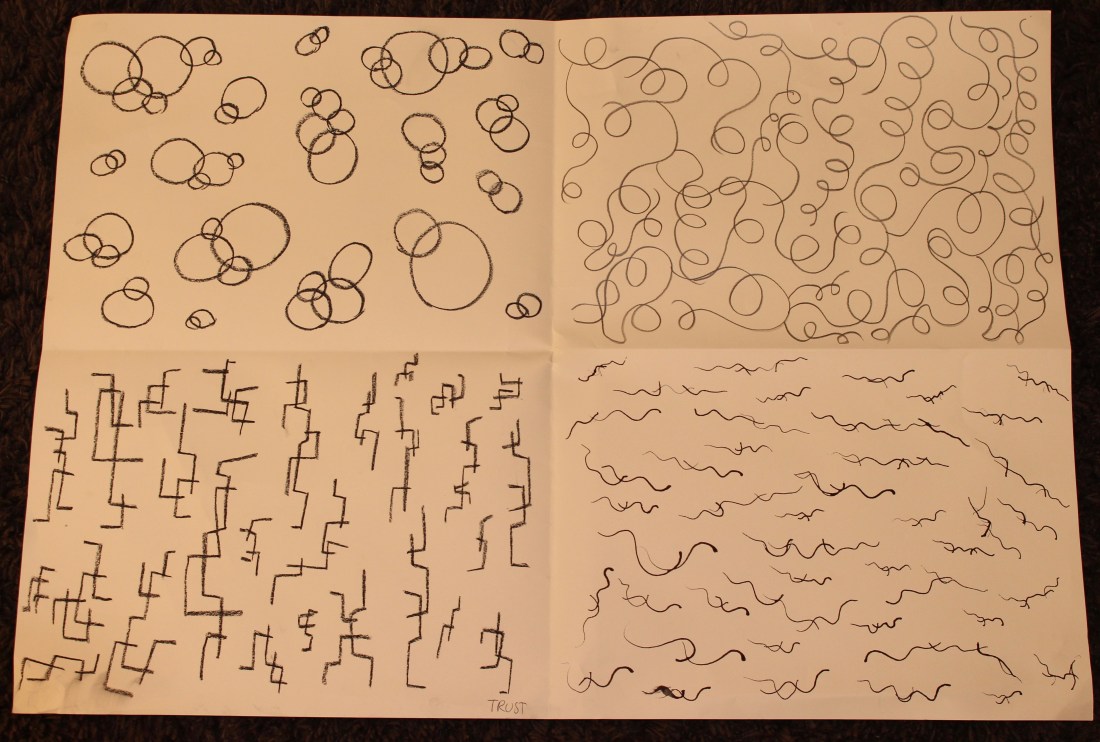
IMG_2541The materials in what order: Top charcoal, top right- graphite , bottom left- conte stick and bottom right- ink and stick.

In this emotion I felt trusting and wanting to represent the feelings I get around my family, my family are a big part of my everyday life therefore I trust them a-lot I wanted to express this emotion through mark making. My marks were light and I trusted the way my hand  was moving, I aimed to show the marks as linking to show the act of linking arms in trust. To show how trust shows connecting and learning how to join as one. I was happy with this piece yet I wished I had done a piece which represented how an emotion would feel when trust isn’t anymore but I think that would lead to my angry piece. I liked feeling this emotion when creating this work, I found my hand movement was light and I represented the emotion well, it was a nice feeling to have when creating marks.


All in all I found this exercise went well and it made me really think about the emotions I feel when creating artwork, I liked the joy feeling best when creating as it made me feel excited and ready to make movement with my medias. The material I was most found of when creating these markings was the ink when I had the right tool to use it with, I found it gave an accurate mark to what I was trying to show. The most difficult emotion I had when creating was anger as I didn’t like to get myself in such a state and use my materials so harsh, yet I found it a good exercise to really get into that mind set and see what art came from it.